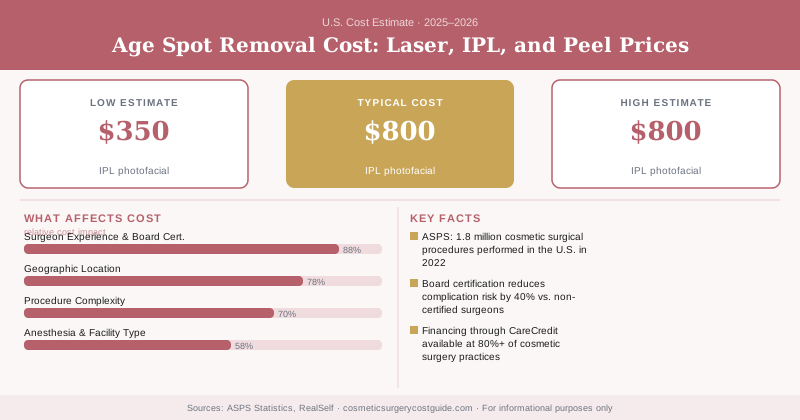
Those flat brown spots on your hands, face, and chest aren’t actually “age” spots in the way the name suggests — they’re sun spots, technically solar lentigines, caused by decades of UV exposure. Which means you can get them in your 30s and avoid them into your 70s, depending entirely on sun habits. They’re also one of the cheaper things to fix in cosmetic dermatology, with most people spending $300 to $2,000 to clear them. Here’s how the pricing works.
What age spot removal costs
Age spots respond to several treatments, and the right one depends on how many spots you have, their size, and your skin tone.
| Treatment | Average Per Session | Sessions |
|---|---|---|
| IPL photofacial | $350–$800 | 2–4 |
| Laser (Q-switched/pico) | $200–$600 | 1–3 |
| Chemical peel | $150–$600 | 3–6 |
| Cryotherapy (per spot) | $50–$200 | 1 |
| Prescription topicals | $30–$150/mo | ongoing |
The American Academy of Dermatology states that ultraviolet exposure is responsible for up to 90% of visible skin aging, including lentigines — and that’s the single most important fact for keeping treatment costs low. The Aesthetic Society reports steady demand for pigment-correcting treatments as patients address sun damage across the face, hands, and chest.
IPL and laser: the fast clearers
For multiple spots scattered across a broad area like the face, hands, or chest, IPL (intense pulsed light) is a popular choice. It targets the pigment with light over two to four sessions and the spots typically darken, crust, and flake away. For isolated, darker spots, a Q-switched or picosecond laser can clear them in fewer sessions but at a per-spot or per-session rate. If your spots come bundled with broader sun damage and texture issues, laser skin resurfacing can tackle pigment and surface quality at the same time.
Age spot removal usually costs $300–$2,000 depending on how many spots you have and the method. IPL and laser clear them fastest; peels and topicals are cheaper but slower. The catch: without daily sun protection, new spots form and you’ll keep paying. SPF isn’t optional — it’s the cheapest part of the whole plan and the one that protects your results.
The gentler, cheaper routes
If you’ve got mild, scattered spots and patience, a series of chemical peels gradually exfoliates pigmented skin and evens your tone for less per session. Prescription topicals with ingredients like hydroquinone or retinoids fade spots over months at a low monthly cost, and pairing them with microneedling can help even out tone and texture together. For one or two isolated spots, in-office cryotherapy (a quick freeze) can knock them out for as little as $50–$200.
Don’t skip the diagnosis
Here’s something that protects more than your budget: not every brown spot is a harmless age spot. Some pigmented lesions can be early skin cancers that mimic lentigines. A board-certified dermatologist should evaluate any spot that’s changing, irregular, or new before you treat it cosmetically. Treating a suspicious lesion with a cosmetic laser instead of having it checked is a serious — and avoidable — mistake.
Be cautious with IPL and certain lasers on darker skin tones. Devices that target brown pigment can cause burns, new dark patches, or paradoxical worsening on richer complexions if the wrong settings are used. Choose a provider experienced with your skin type, and consider gentler options like peels or topicals first. The wrong laser can create a more expensive pigment problem than the spots you started with.
How to keep costs down
Start with the cheapest option that fits your spots — topicals or peels for mild, scattered pigment; targeted laser only for stubborn dark spots. Treat the worst areas first; you may be satisfied before clearing everything. And the biggest saver of all: wear broad-spectrum SPF daily so you’re not paying to remove the same spots again next year. If you want a larger combined plan, our cosmetic surgery financing guide covers the options.
The bottom line
Age spot removal runs $300–$2,000, making it one of the more affordable cosmetic fixes. IPL and laser clear spots fastest, peels and topicals offer a budget-friendly slow route, and a dermatologist should check anything suspicious first. Pair treatment with daily sun protection and you won’t be paying to remove new spots year after year.
Frequently Asked Questions
Laser age spot removal typically costs $150–$800 per session, with most patients needing 1–3 sessions to fully clear spots, bringing the total to $300–$2,000. Prices vary by treatment area size, laser type (such as Q-switched or fractional), and geographic location, with urban centers generally charging more than rural areas.
Insurance rarely covers age spot removal because it is considered cosmetic rather than medically necessary, even though sun spots are technically a skin condition. You can expect to pay the full cost out-of-pocket, though some dermatologists offer payment plans or package discounts if you treat multiple areas in one visit.
Most patients need 1–3 laser or IPL sessions spaced 4–6 weeks apart to see significant fading, though deeper or more numerous spots may require additional treatments. Recovery is minimal for most methods—you can typically return to normal activities immediately, though treated areas may appear red or slightly darker for a few days before spots begin to fade.