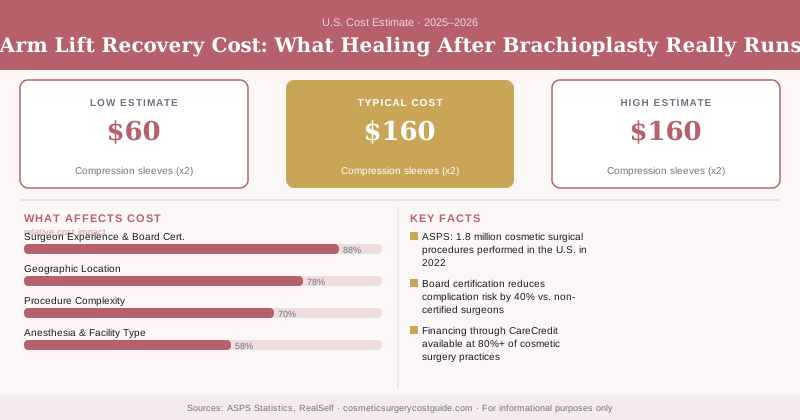
Most people assume an arm lift is a minor procedure with a quick, cheap recovery. Wrong. The incision runs from your armpit nearly to your elbow, the scar is long and visible, and you can’t use your arms normally for weeks. That combination drives a recovery cost that catches a lot of patients off guard.
A brachioplasty removes loose skin and fat from the upper arms, often after major weight loss. Because your arms do almost everything in daily life, the restrictions and the help you’ll need add up. Here’s what recovery actually costs.
The Recovery Cost Breakdown
Arm lift recovery is moderate, but the long scar and the can’t-use-your-arms reality push the numbers higher than people expect.
| Item | Cost |
|---|---|
| Compression sleeves (x2) | $60–$160 |
| Drain care & wound supplies | $30–$80 |
| Prescription pain meds & antibiotics | $25–$90 |
| Scar treatment (silicone, long incision) | $60–$200 |
| Help at home (first 1–2 weeks) | $300–$1,000 |
| Lost wages (2–3 weeks off) | $1,000–$3,600 |
| Total non-surgical recovery | $1,475–$5,130 |
The American Society of Plastic Surgeons reported over 1.5 million surgical cosmetic procedures in 2023, with body-contouring surgeries like arm lifts climbing sharply alongside the rise in major weight-loss and GLP-1 patients. The long incision is what makes scar care a real budget line here.
Why You’ll Need Real Help at Home
This is the cost people miss. Your arms do everything, dressing, cooking, washing your hair, opening jars, so when both are restricted, basic daily life gets hard. For the first week or two, you’ll likely need help with ordinary tasks. Budget for it honestly rather than assuming you’ll manage solo.
The Scar Is the Trade-Off
A brachioplasty leaves a long scar along the inner arm. That’s the accepted trade for tighter contour, but it means scar care matters. Silicone gel or sheets over three to six months run $60–$200, and many patients later consider laser treatment to soften the line, which is an optional add-on.
Budget $400–$2,200 beyond your arm lift surgery quote, plus lost wages, which can push it higher. Help at home and scar treatment are the costs people overlook, since both arms being out of commission makes daily life genuinely difficult for a week or two.
Compression Sleeves Do the Work
You’ll wear compression sleeves to control swelling and help skin settle onto the new contour. Like all compression garments, you need two so one’s always clean. Sleeves run $60–$160 for a pair, and a poor fit slows healing, so follow your surgeon’s sizing.
Don’t push your arms back into normal use early to save on help at home. Lifting, reaching overhead, or straining the incision before it’s healed can pull the long closure apart, widening the scar you were trying to minimize. A revision to fix a stretched scar costs far more than a week of assistance.
Drains and Wound Care
Some arm lifts use small drains for the first week, depending on technique. You’ll manage gauze, tape, and drain output, roughly $30–$80 in supplies. Ask whether your surgeon includes a post-op kit, since some do and some don’t.
Trimming the Total
Buy your sleeves, scar products, and wound supplies at retail rather than through the office. Line up help before surgery, ideally a mix of family and a few paid days for the hardest stretch. And confirm your real time-off needs, since desk workers return sooner than anyone with a physical job.
If an arm lift is part of a larger post-weight-loss plan, recovery costs stack, so budget accordingly. And if the surgery price is the hurdle, financing it keeps recovery cash free for the help you’ll genuinely need. For the full timeline, our recovery guide lays it out. The arms run your daily life, so plan a recovery that accounts for losing them for a while.
Frequently Asked Questions
Arm lift recovery typically adds $400–$2,200 to your total out-of-pocket costs, covering compression sleeves ($150–$400), prescription medications ($50–$200), professional scar care treatments ($200–$1,000), and lost wages during the 2–3 week recovery period when you cannot return to work.
Insurance rarely covers brachioplasty or its recovery expenses because the procedure is considered cosmetic, even after significant weight loss; you will pay for compression garments, medications, and scar treatments out-of-pocket, though some employers may cover partial lost wages if you have short-term disability benefits.
Most patients cannot use their arms normally for 4–6 weeks after brachioplasty due to the long incision running from armpit to elbow; you should plan for at least 2–3 weeks completely off work and light-duty activities only for the following 2–3 weeks, which significantly impacts your recovery budget.