Acne scars on your back, chest, and shoulders are their own beast. The skin’s thicker, the area’s larger, and the scarring is often more raised and stubborn than what shows up on your face. So if you’ve been quoted a price for facial acne scars and assumed your back would cost the same — it usually costs more. Here’s the real breakdown for treating body acne scars and how to keep the total from spiraling.
What body acne scar treatment costs
Body acne scarring comes in types: pitted (atrophic), raised (hypertrophic or keloid), and discolored (post-inflammatory marks). Each responds to different treatments, and the larger surface area drives up per-session pricing.
| Treatment | Average Per Session | Best For |
|---|---|---|
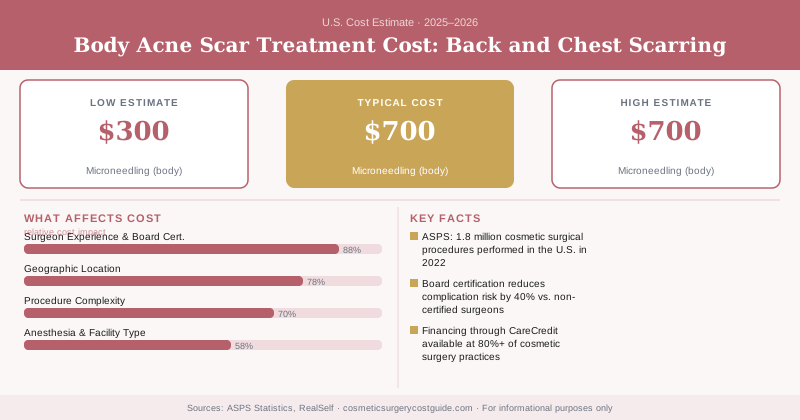
| Microneedling (body) | $300–$700 | Pitted / textured scars |
| Laser resurfacing (body) | $600–$1,500 | Pitted scars, texture |
| Chemical peel (body) | $200–$600 | Discoloration, mild scars |
| Steroid injections | $100–$400 | Raised / keloid scars |
| RF microneedling | $700–$1,500 | Deep atrophic scars |
The American Academy of Dermatology reports that acne affects up to 50 million Americans annually, and scarring can develop in a significant share of moderate-to-severe cases — including on the trunk. The Aesthetic Society has also tracked steady growth in body skin treatments as patients address areas beyond the face.
Why the body costs more than the face
Two reasons. First, surface area — your back is many times larger than your cheeks, so resurfacing or microneedling a full back uses more time, more product, and more provider effort. Second, body skin heals more slowly and scars more readily than facial skin, so treatments are often spaced further apart and may need more sessions. Budget accordingly.
Full treatment of body acne scars usually runs $1,000–$4,000, more than facial scarring because of the larger area and slower healing. Microneedling and laser resurfacing handle pitted scars; steroid injections flatten raised ones; peels fade discoloration. Identify your scar type first — treating the wrong type wastes both sessions and money.
Pitted scars: needling and laser
For depressed, pitted scars on the back or chest, collagen-stimulating treatments work best. Microneedling is the affordable starting point, while laser skin resurfacing and Morpheus8 RF microneedling go deeper for stubborn cases. Expect a series of three to six sessions for meaningful improvement.
Raised scars: a different approach
Hypertrophic and keloid scars — common on shoulders and chest — need flattening, not resurfacing. Series of steroid injections at $100–$400 each soften and flatten raised tissue over time. Treating a raised scar with a resurfacing laser meant for pits can actually make it worse, which is why diagnosis matters.
Discoloration
Dark or red marks left after acne clears aren’t true scars — they’re pigment and vascular changes that often fade with time, a chemical peel, or topical care. Don’t pay for aggressive laser or needling for marks that would have faded anyway.
Be careful with aggressive lasers on the chest and shoulders, especially on darker skin tones. These areas heal slowly and are prone to new scarring and pigment changes if over-treated. Conservative, well-spaced sessions are safer and often cheaper than fixing a treatment-induced problem. Choose a provider experienced with body — not just facial — work.
How to keep costs down
Get a proper diagnosis of your scar type before paying for anything — it’s the single biggest money-saver. Treat the worst areas first rather than the entire back at once; you may be satisfied before you’ve covered everything. Pay per session for series-based work so you can stop at your goal. And if you’re spreading a larger plan, see our cosmetic surgery financing guide.
The bottom line
Body acne scar treatment runs $1,000–$4,000 because of the larger area and slower healing compared to the face. Match the method to your scar type — needling or laser for pits, injections for raised scars, peels for discoloration — and treat strategically rather than blanket-treating everything. That’s how you get real results without overspending.
Frequently Asked Questions
Body acne scar treatment costs $200–$1,500 per session depending on the method used, with total treatment plans typically running $1,000–$4,000. Back and chest areas cost more than facial treatments because the skin is thicker and the treatment area is larger, often requiring more aggressive techniques to address raised or stubborn scarring.
Most health insurance plans classify acne scar treatment as cosmetic and do not cover it, leaving patients responsible for the full out-of-pocket cost. However, if scarring is severe enough to impair function or cause documented medical issues, some insurers may partially cover treatment—it's worth submitting documentation to your provider for review.
Most patients need 2–4 sessions spaced 4–6 weeks apart to see meaningful improvement, though deeper or more extensive scarring may require additional treatments. Results typically continue improving for 3–6 months after your final session as collagen remodeling occurs, so expect a 4–8 month timeline from first appointment to final outcome.