What does cosmetic surgery actually cost when you’re 24? Less than you might fear for a single procedure, and more than you’d expect once you start stacking. Twenty-somethings are the fastest-rising segment in aesthetic surgery, and the procedures they choose are different from what older patients want.
In your 20s, the goal is usually shape and proportion, not anti-aging. That means rhinoplasty, breast augmentation, and body contouring dominate — procedures that refine features rather than reverse aging. Facelifts and eyelid surgery barely register at this age.
The demand is well documented. ASPS data has shown rhinoplasty consistently ranking as a top procedure for patients under 30, and the Aesthetic Society reports steady growth in younger aesthetic patients over the past several years. If you’re in your 20s and considering surgery, you’re far from alone.
What 20s Procedures Cost
| Procedure | Cost |
|---|---|
| Rhinoplasty | $7,000–$15,000 |
| Breast augmentation | $4,000–$8,000 |
| Liposuction (one area) | $3,500–$7,000 |
| Breast lift | $5,000–$10,000 |
| Two procedures combined (one session) | $9,000–$18,000 |
The Procedures That Make Sense Young
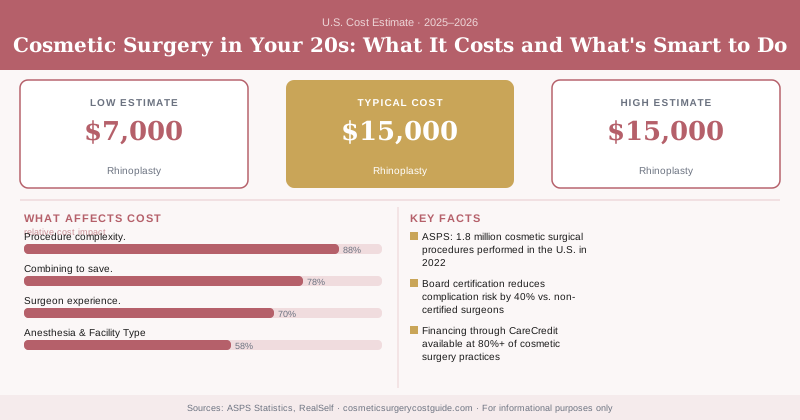
A rhinoplasty is the classic 20s procedure — your facial bones are fully mature, and the result lasts a lifetime, which makes the $7,000–$15,000 price easier to justify across decades. A breast augmentation is the most-requested surgical procedure in this group, running $4,000–$8,000.
Body contouring is trickier. Liposuction works best on stubborn pockets that won’t budge with diet and exercise — not as a weight-loss tool. At this age, surgeons often steer you toward targeted work rather than large-volume procedures.
In your 20s, cosmetic surgery favors shape-and-proportion procedures — rhinoplasty, breast augmentation, and targeted liposuction — over anti-aging work. A single procedure runs $4,000–$15,000. If you want two, combining them in one session shares the anesthesia and facility fees, saving $3,000–$6,000 versus separate surgeries.
What Drives the Variation
Procedure complexity. A primary rhinoplasty costs less than one that also rebuilds a deviated septum. Implant type drives breast-augmentation price.
Combining to save. If you want a breast augmentation and liposuction, one session means one anesthesia fee instead of two — a savings of $3,000–$6,000.
Surgeon experience. This is not the place to bargain-hunt. A cheap result you live with for 50 years is a bad deal. Verify credentials through the board-certified plastic surgeon guide.
The Long View
Here’s what makes 20s surgery unique: you’ll live with the result longer than anyone. A nose done at 24 is a nose you wear at 64. That argues for spending up on surgeon quality and thinking hard about trends versus timeless proportions.
It also means waiting when you’re unsure. Surgeons routinely tell younger patients to hold off if motivation seems tied to a relationship, a job, or social pressure rather than a stable long-term desire.
Be honest about why you want surgery young. Reputable surgeons screen for body dysmorphia and will decline to operate if the motivation seems unhealthy or unstable. If a surgeon agrees to anything you ask without questions, that’s a red flag — not good service.
Paying for It
Insurance won’t cover cosmetic procedures. The narrow exception: a rhinoplasty that corrects a documented breathing problem may have the functional portion partially covered — get pre-authorization in writing.
Most practices offer financing through CareCredit or Prosper, which is how a lot of 20-somethings pay. A $9,000 procedure on a 24-month plan runs around $400/month — but confirm the APR before signing, because longer terms often carry 14–26% interest. Ask for an itemized quote, and if you’re combining, make sure the anesthesia shows as one shared line.
Frequently Asked Questions
Rhinoplasty typically costs between $5,000 and $12,000 for patients in their 20s, depending on surgeon experience, geographic location, and whether revision work is needed. This price usually includes the surgeon fee, facility costs, and anesthesia, but does not cover pre-operative testing or post-operative medications.
Health insurance does not cover purely cosmetic procedures like breast augmentation or rhinoplasty performed for aesthetic reasons, making these out-of-pocket expenses. However, if rhinoplasty or another procedure is medically necessary to correct a breathing problem or injury, insurance may cover part or all of the cost—you'll need pre-authorization from your insurance company.
Yes, cosmetic surgery is generally safe for healthy twenty-somethings, but you should wait until your face and body have finished developing (usually by age 21–23) and choose a board-certified surgeon with strong credentials and a portfolio matching your goals. Recovery typically takes 1–3 weeks for most procedures, so plan time off work and avoid strenuous activity during healing.