What does it actually cost to borrow $10,000 for cosmetic surgery? That’s the question almost nobody asks before signing — and it’s the one that determines whether you pay $10,500 or $15,000 for the same procedure. A medical loan is just a personal loan dressed up for healthcare, and the sticker price of your surgery is only the starting line.
Let’s run the real numbers on what a cosmetic surgery medical loan costs over its life.
How Medical Loans Work
A medical loan is an unsecured installment loan: you borrow a lump sum, then repay it in fixed monthly payments over a set term, usually 24 to 84 months. Lenders like those advertised through surgeon offices (PatientFi, Prosper Healthcare, LightStream-style products) approve you based on credit score and income, then deposit funds you use to pay the practice upfront.
The cost lives in two numbers: the APR and the term. APR bundles your interest rate with most fees. The term decides how long that interest compounds.
A medical loan’s true cost is the APR multiplied across the term — not the monthly payment. A low monthly payment over 72 months almost always costs more total than a higher payment over 24 months. Always compare total-of-payments, not the monthly figure the office quotes you.
What a $10,000 Loan Really Costs
Here’s how the same $10,000 plays out at different rates and terms:
| APR | Term | Monthly Payment | Total Repaid | Cost of Borrowing |
|---|---|---|---|---|
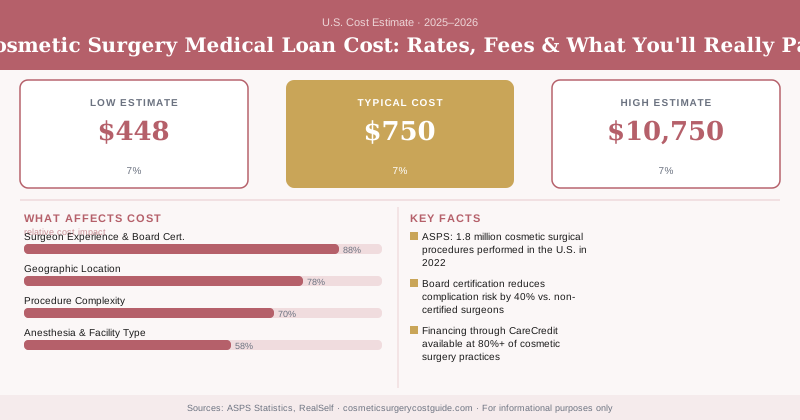
| 7% | 24 months | $448 | $10,750 | $750 |
| 12% | 36 months | $332 | $11,950 | $1,950 |
| 18% | 48 months | $294 | $14,100 | $4,100 |
| 25% | 60 months | $293 | $17,600 | $7,600 |
Same procedure. The difference between a 7% two-year loan and a 25% five-year loan is nearly $7,000 — almost the cost of a second surgery. According to the Consumer Financial Protection Bureau, medical financing products often carry rates and deferred-interest terms that push effective costs well above what borrowers expect.
Watch the Fees
APR captures most but not all costs. Read the agreement for:
| Fee Type | Typical Range |
|---|---|
| Origination fee | 1% – 8% of loan amount |
| Prepayment penalty | $0 on good lenders; varies |
| Late payment fee | $25 – $40 per occurrence |
| Returned payment fee | $15 – $35 |
An 8% origination fee on $10,000 is $800 carved out before you see a dime — sometimes added to the balance so you pay interest on it too.
Many “no interest if paid in full” promotions are deferred-interest plans, not true 0%. Miss the payoff window by one day and interest gets charged retroactively from day one at rates near 27%. The CFPB has repeatedly flagged these. If you can’t guarantee full payoff in the promo period, treat it as a high-APR loan.
Medical Loan vs. Other Options
A dedicated medical loan often beats a credit card on APR but can lose to a personal loan from your own bank or credit union. Compare all three before committing. Our cosmetic surgery financing guide lays out the full menu, and CareCredit is the most common surgeon-office option worth pricing against a true installment loan.
How to Cut the Cost
Three moves shrink the total: take the shortest term you can afford, shop at least three lenders for the lowest APR, and put down a chunk of cash so you borrow less. Even better — delay and save part of it. If you can cover half upfront, you halve the interest. See how to save money on cosmetic surgery for tactics that reduce the amount you need to finance in the first place. Prices also vary widely by location, so check plastic surgery cost by state.
The Bottom Line
A cosmetic surgery medical loan turns a $10,000 procedure into $10,750 to $17,600 depending on rate and term. The monthly payment is a distraction — the total-of-payments and the APR are what matter. Borrow less, repay faster, dodge deferred-interest traps, and compare a bank personal loan against the office’s offer before you sign anything.
Frequently Asked Questions
A $10,000 medical loan for cosmetic surgery typically costs between $11,500 and $14,000 total when interest is factored in, depending on your APR and loan term. The final cost depends on your credit score (which affects your interest rate) and whether you choose a 24-month, 36-month, or 60-month repayment plan. For example, a $10,000 loan at 10% APR over 36 months costs approximately $12,100, while the same loan at 15% APR costs roughly $13,400.
Insurance does not cover cosmetic surgery procedures or medical loans for elective cosmetic work, since these are considered optional rather than medically necessary. You are responsible for the full cost out-of-pocket, though you can finance the entire amount through a medical loan or payment plan. If a cosmetic procedure becomes medically necessary (such as reconstructive surgery after injury or illness), insurance may cover it, but you would need pre-authorization and documentation from your doctor.
Recovery time varies by procedure, but most common cosmetic surgeries require 1 to 3 weeks of downtime before returning to normal activities and work. Procedures like facelifts or liposuction typically need 2 to 3 weeks of reduced activity, while less invasive procedures like injectables require minimal to no downtime. Your surgeon will provide specific restrictions on physical activity, driving, and work duties during your personalized recovery timeline.