Two surgeries, one operating room, one anesthesia bill — that’s the math behind cosmetic surgery package deals, and when it’s done right it can save you $2,000 to $6,000. When it’s done wrong, it’s a marketing gimmick that pressures you into procedures you didn’t need. The trick is telling the genuine savings from the upsell.
So how do package deals actually work, and when do they save real money?
Where the Savings Come From
Your surgery bill isn’t one number — it’s a stack of separate fees. Some of those fees you pay once regardless of how many procedures happen in a single session. That’s the entire logic of a package.
| Fee Component | Paid Per Procedure? | Savings When Combined |
|---|---|---|
| Surgeon’s fee | Yes (per procedure) | Minimal — each adds time |
| Facility/OR fee | Once per session | $1,000 – $3,000 saved |
| Anesthesia fee | Once per session | $500 – $2,000 saved |
| Pre-op labs/workup | Once | $200 – $500 saved |
| Recovery garments/supplies | Sometimes shared | Modest |
The surgeon’s fee scales with each procedure because more work takes more time. But facility and anesthesia fees are charged per session — so combining two procedures into one trip to the OR is where the real dollars get saved.
Real package savings come from sharing facility and anesthesia fees across multiple procedures in one operating-room session — typically $2,000 to $6,000. The surgeon’s fee still scales per procedure. A bundle only saves money if you genuinely wanted every procedure in it; never add surgery just to “get the deal.”
The Most Common Packages
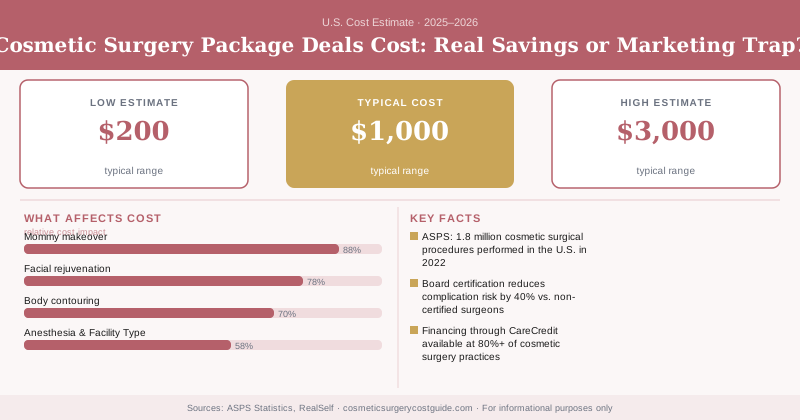
The mommy makeover is the classic example: a tummy tuck, breast procedure, and liposuction bundled into one session. Combining them avoids paying anesthesia and facility fees two or three separate times. According to the Aesthetic Society, Americans spent over $11 billion on aesthetic procedures in 2023, and combination procedures are a large and growing share precisely because of these shared-fee economics.
Popular real packages include:
- Mommy makeover: tummy tuck + breast lift/augmentation + lipo
- Facial rejuvenation: facelift + eyelid surgery + brow lift
- Body contouring: lipo + skin tightening in multiple areas
When Packages Cost You More
Bundles can backfire. Longer combined surgeries carry higher anesthesia risk and longer recovery, and some surgeons cap total OR time for safety — meaning a “package” might still require two sessions, erasing the savings. And the oldest trick in the book: a low headline package price that quietly adds a procedure you never wanted.
Beware bundles that combine high-risk or long procedures purely to hit a price point. Stacking too much into one session raises complication risk. A board-certified surgeon will refuse combinations that aren’t safe for you — that’s a feature, not an obstacle. If a price seems impossibly low for the work involved, scrutinize the surgeon’s credentials before the math.
How to Evaluate a Package Honestly
Ask the office for an itemized quote of each procedure separately versus bundled. If the bundle saves money only on facility and anesthesia, that’s legitimate. If it “saves” by adding a free or discounted procedure you weren’t seeking, that’s an upsell wearing a discount costume.
Compare against doing the procedures solo, then layer other savings. How to save money on cosmetic surgery covers timing and negotiation, and plastic surgery cost by state shows how location shifts the baseline. If you need to spread the bundled cost, cosmetic surgery financing walks through loans and cards. For the most popular combination, tummy tuck cost breaks down the anchor procedure.
The Bottom Line
Cosmetic surgery package deals can save $2,000 to $6,000 by sharing facility and anesthesia fees across one operating session — real money when the bundle includes only procedures you actually wanted. Get an itemized side-by-side quote, confirm the combination is safe with a board-certified surgeon, and walk away from any package that “saves” by adding surgery you never asked for.
Frequently Asked Questions
Package deals typically save $2,000 to $6,000 when combining procedures into a single operating room visit, primarily by splitting facility fees and anesthesia costs. For example, combining breast augmentation ($4,500–$8,000) with liposuction ($3,000–$7,000) might reduce your total by $3,000–$5,000 compared to scheduling them separately, though actual savings depend on your surgeon's pricing and facility.
Cosmetic procedures are almost never covered by insurance, whether bundled or performed separately, since insurers classify them as elective. However, if one procedure has a reconstructive or medical component (like rhinoplasty for breathing problems), that portion may qualify for partial coverage—bundle savings would still apply only to the purely cosmetic parts of your package.
Combining two procedures is medically safe when they target different body areas and don't extend operating time beyond 3–4 hours, though your surgeon must assess your health history and recovery capacity. Red flags include pairing procedures that would stress recovery (like two major surgeries requiring similar post-op restrictions) or bundling a procedure you didn't initially want just because it's discounted—genuine packages should address goals you already had planned.