Take off too much eyelid skin and you can’t close your eyes. That’s the cautionary tale every oculoplastic surgeon tells, and it’s the reason eyelid revision is some of the most delicate corrective work in cosmetic surgery. A few millimeters separate a great result from a complication.
Eyelid surgery, or blepharoplasty, is consistently among the top five cosmetic surgical procedures in the U.S., with the Aesthetic Society reporting it in the hundreds of thousands annually. With that volume, revisions are a real category. Here’s what they cost.
The Common Revision Reasons
Over-resection of upper-lid skin makes closing the eye difficult and the look hollow. Asymmetry between the two eyes is jarring. A lower lid pulled down (ectropion) exposes the white below the iris and causes dryness. And under-correction leaves the puffiness or hooding you paid to remove. Each needs a different fix.
Eyelid Surgery Revision Cost
| Revision Type | Cost Range | What It Fixes |
|---|---|---|
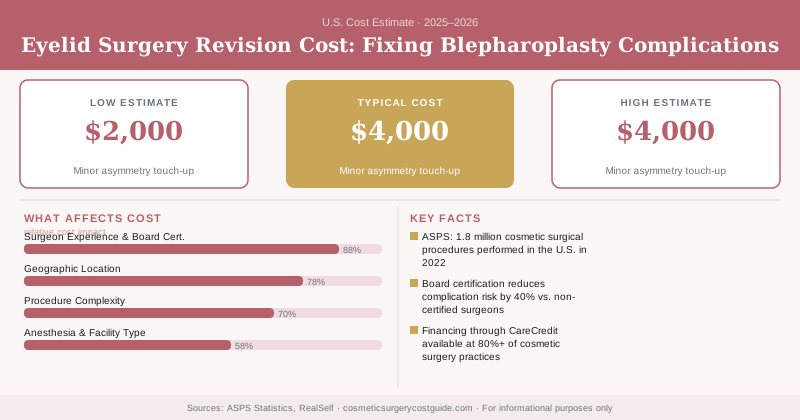
| Minor asymmetry touch-up | $2,000–$4,000 | Uneven crease or fold |
| Under-correction redo | $3,000–$6,000 | Residual skin or fat |
| Lower lid retraction repair | $4,000–$8,000 | Pulled-down lid (ectropion) |
| Over-resection / graft repair | $5,000–$9,000 | Skin graft to restore closure |
| Combined upper + lower revision | $6,000–$9,000+ | Multiple issues |
These include surgeon, anesthesia, and facility. The over-resection repairs are the priciest because restoring removed tissue often needs a skin graft.
Why Over-Resection Is the Nightmare
You can always take more away later. You can’t easily put it back. When too much upper-lid skin is removed, the eye may not close fully, causing dryness and exposure. Fixing it often requires grafting skin from elsewhere — technically hard and the most expensive revision. This is why a conservative first eyelid surgery is so important.
Lower-lid retraction (ectropion) isn’t just cosmetic — it exposes the eye, causing chronic dryness, irritation, and potential corneal damage. If your lower lid is pulled down after surgery, treat it as a functional problem and see an oculoplastic specialist promptly. This is one revision you shouldn’t delay.
When Insurance Helps
Pure cosmetic revision is out of pocket. But functional complications — an eye that won’t close, or a lid pulled down causing exposure — may qualify for insurance because they threaten eye health. Our insurance and plastic surgery guide explains how to document medical necessity.
Eyelid revision runs $3,000–$9,000, with over-resection and lid-retraction repairs at the top because they often need skin grafts. Functional complications like an eye that won’t close may be insurance-eligible. The best prevention is a conservative first surgery — you can always remove more, but restoring tissue is hard.
Timing
Wait at least three to six months for swelling to settle before judging the result. Eyelids swell unpredictably, and apparent asymmetry at week four often evens out. The exception: functional problems like exposure, which need prompt attention regardless of swelling.
Choosing a Surgeon
For eyelid revisions, an oculoplastic surgeon or a facial plastic surgeon with strong revision experience is ideal. Our board-certified plastic surgeon guide covers credentialing, and cosmetic surgery financing can help with the out-of-pocket portion.
The Millimeter Game
Eyelid surgery is measured in millimeters, and that’s exactly why revisions are so delicate. A crease set a millimeter too high or low changes the whole eye. A fold that’s slightly uneven between sides is immediately visible. Revision surgeons work with surgical loupes and tiny sutures, and the precision required is part of why even a “minor” eyelid revision carries a meaningful price. There’s very little margin for a heavy hand here.
Upper vs. Lower Lid Revisions
These are different problems with different price tags. Upper-lid revisions usually address residual hooding, an uneven crease, or over-resection. Lower-lid revisions are trickier because the lower lid supports the eye — pulling it down even slightly causes exposure and dryness. Lower-lid retraction repair often involves a graft or a canthal tightening procedure, which is why it sits higher on the cost table than a simple upper-lid touch-up.
What Recovery Looks Like
Eyelid revision recovery is similar to the original: bruising and swelling for one to two weeks, with stitches usually out within a week. The eyes may feel tight or dry early on. Most people are presentable in about ten days with some concealer. Functional repairs for exposure may involve lubricating drops and ointments while healing. Budget a little downtime and a few follow-up visits into your plan.
Bottom Line
Eyelid revision is precision work priced at $3,000–$9,000, with tissue-restoration cases costing most. Functional issues like an eye that won’t close deserve prompt, possibly insured care — and a conservative first surgery is the cheapest insurance against ever needing this.
Frequently Asked Questions
Eyelid surgery revision typically costs $3,000–$9,000, depending on the complexity of the complication being corrected. Fixing over-resection, asymmetry, or a pulled-down lower lid each fall within this range, with more complex cases requiring skin grafts or additional surgical time pushing toward the higher end.
Insurance rarely covers cosmetic eyelid revision since the original blepharoplasty was elective. However, if the complication (such as inability to close the eye) causes a functional or medical problem, some insurers may cover partial costs—expect to pay most or all of the $3,000–$9,000 out-of-pocket regardless.
Most surgeons recommend waiting 3–6 months after your initial blepharoplasty before pursuing revision surgery to allow swelling to fully resolve and see the true final result. Attempting revision too early can lead to misjudgment of what actually needs correction.