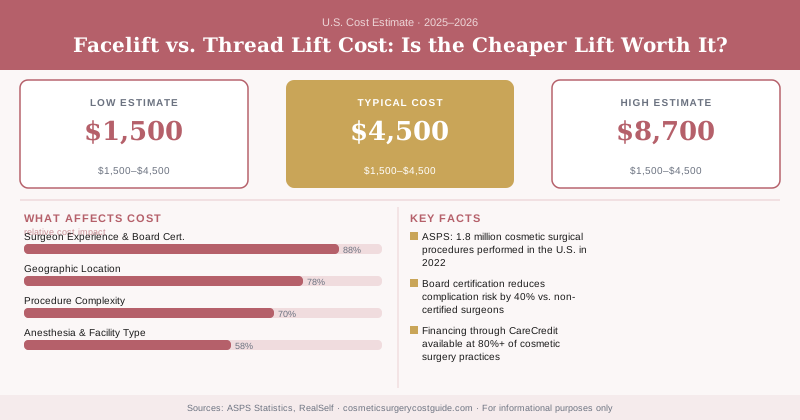
The $8,700 quote made you flinch. Then your friend mentioned her thread lift cost a quarter of that. So why would anyone pay full surgical price? The answer comes down to one thing: how much sagging you’re actually fighting, and how long you want the fix to hold.
The Aesthetic Society reported the average surgeon fee for a facelift at roughly $8,700 in 2023. A thread lift, by contrast, usually falls between $1,500 and $4,500 depending on how many threads you need.
| Thread Lift | Surgical Facelift |
|---|---|
| $1,500–$4,500 | ~$8,700 surgeon fee |
| Dissolvable sutures lift skin | Removes and tightens tissue |
| Local anesthesia, awake | General or twilight anesthesia |
| Lasts 1–3 years | Lasts 10+ years |
| Minimal downtime | 2–3 week recovery |
What a thread lift can and can’t do
A thread lift uses dissolvable barbed sutures, threaded under the skin, to gently pull sagging tissue upward. It’s quick, done while you’re awake, and you walk out the same day. For someone in their late 30s or 40s with mild jowling, it can deliver a subtle, refreshed look.
But here’s the catch. Threads don’t remove anything. They reposition. So if you’ve got significant loose skin or deep folds, threads simply can’t hold that weight. The lift looks modest and fades as the sutures dissolve, usually within one to three years.
What you’re really paying for with a facelift
A surgical facelift removes excess skin, repositions deeper tissue layers, and tightens the underlying muscle. That’s why it lasts a decade or more. You’re not renting a result, you’re buying a structural change. The full facelift cost often climbs past $12,000 once anesthesia and facility fees join the surgeon fee, but you amortize it over many years.
Do the math. A thread lift at $3,000 every two years costs $15,000 over a decade, and the results were never as dramatic. Suddenly the facelift looks like the value play.
A thread lift is genuinely good for mild, early sagging and patients who can’t take downtime. But for moderate-to-severe laxity, it’s a temporary patch. If you’re already seeing real jowls or neck sag, the facelift costs more upfront yet wins on results-per-dollar over time.
The age and laxity test
Surgeons often use a rough guideline. Mild laxity, younger skin, and a desire to avoid surgery point toward threads or other non-surgical options. Moderate to advanced sagging points to a facelift, because nothing else genuinely lifts that much tissue.
If you’re somewhere in the middle, you might explore other in-between options. A thread lift cost breakdown shows how add-ons like extra threads or combining with fillers changes the total.
Be wary of clinics pitching thread lifts as a “facelift alternative” for heavy sagging. Threads can break, migrate, or cause dimpling when overloaded. If a provider promises facelift-level results from threads on significant laxity, get a second opinion from a board-certified plastic surgeon.
Downtime: the honest comparison
This is where threads genuinely shine. You might have some swelling and tightness for a few days, but most people return to work within a day or two. Minimal bruising. No drains. No general anesthesia.
A facelift is real surgery. Expect swelling, bruising, and two to three weeks before you feel comfortable in public. Most patients say it was worth it, but you have to budget the recovery, not just the dollars.
Can you combine them?
Sometimes. A patient might get a facelift for structural lifting and later use threads or fillers to maintain freshness between bigger procedures. They’re not strictly either-or across a lifetime.
What can go wrong
Every procedure has trade-offs. With a thread lift, the most common complaints are dimpling where a thread catches, visible or palpable threads, and the lift simply fading sooner than hoped. These are usually minor and resolve, but they’re real. A facelift carries the risks of any surgery, bruising, swelling, rare nerve irritation, and a longer scar, but in skilled hands the complication rate is low and the result is far more reliable. Knowing the failure modes of each helps you set realistic expectations before you spend a dime.
Bottom line
If your sagging is mild and downtime is a dealbreaker, a thread lift is a reasonable, lower-cost choice, just know it’s temporary. If you’ve got real laxity and want a result that lasts a decade, the facelift earns its higher price. Worried about the upfront cost? Our cosmetic surgery financing guide explains how monthly plans make either option more manageable.
Frequently Asked Questions
A surgical facelift averages $8,700 in surgeon fees, while a thread lift typically costs $1,500–$4,500 depending on the number of threads used. This means you're looking at a price difference of roughly $4,200–$7,200 more for the surgical option.
Neither facelifts nor thread lifts are typically covered by insurance since both are considered cosmetic procedures rather than medically necessary treatments. You should expect to pay the full cost out-of-pocket, though some surgeons offer financing plans to help spread payments over time.
Thread lift results typically last 1–3 years before threads dissolve and sagging gradually returns, requiring repeat treatments. A surgical facelift provides longer-lasting results, generally 7–10 years or more, making it the better choice if you want a durable fix for significant sagging.