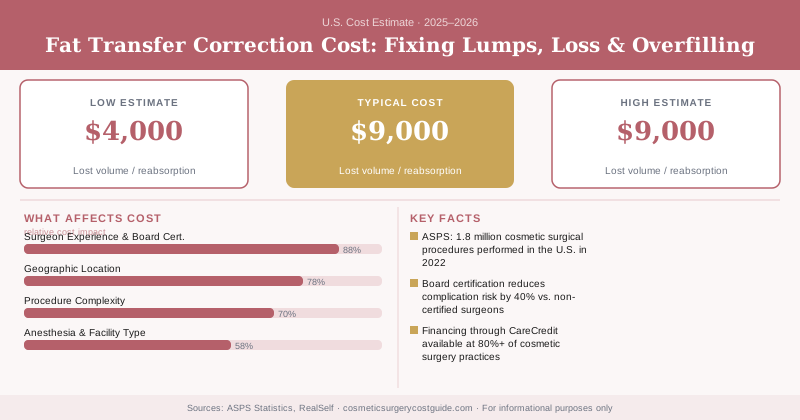
Fat transfer has a dirty secret: a chunk of the fat you pay to inject simply doesn’t survive. Studies and surgeons commonly cite fat survival rates anywhere from 50% to 80%, which means unpredictable results are baked into the procedure. When the outcome is lumpy, uneven, or vanished, correction is the fix — and here’s what it costs.
Fat grafting is increasingly popular across the face, breasts, and buttocks, with the Aesthetic Society tracking strong growth in fat-based procedures in recent years. More procedures mean more corrections. Let’s break it down by problem.
The Four Things That Go Wrong
Fat reabsorbs unevenly, leaving asymmetry. It survives in clumps, leaving palpable lumps or nodules. Too much was injected, leaving overfilling. Or it forms oil cysts and hard calcifications. Each problem has a different correction and a different price.
Fat Transfer Correction Cost
| Problem | Correction | Cost Range |
|---|---|---|
| Lost volume / reabsorption | Repeat fat grafting | $4,000–$9,000 |
| Lumps / nodules | Liposuction or excision | $3,000–$7,000 |
| Overfilling | Liposuction reduction | $3,000–$6,000 |
| Oil cysts / calcification | Aspiration or excision | $2,000–$5,000 |
| Complex multi-area correction | Combined approach | $8,000–$12,000+ |
These include surgeon, anesthesia, and facility. Because fat survival is unpredictable, volume corrections sometimes need more than one session.
Where the Correction Happens
The face is delicate work — overfilled cheeks or lumpy under-eyes need careful, conservative reduction. The breasts can develop oil cysts that show on mammograms. The buttocks, after a BBL, most often need asymmetry rebalancing. Each region has its own difficulty and cost.
Lumps from fat transfer can sometimes mimic suspicious findings on imaging, especially in the breast. Always tell your radiologist you’ve had fat grafting before any mammogram or ultrasound. A correction surgeon should also rule out anything concerning before removing a “lump” they assume is just fat.
Why Volume Loss Is Tricky to Fix
If too much fat reabsorbed, the fix is more fat — but the second graft faces the same survival lottery. Surgeons sometimes overcorrect slightly to account for expected loss, but that risks overfilling. There’s no perfect solution, which is why managing expectations matters. This overlaps directly with liposuction revision when the donor or treated site also needs reshaping.
Fat transfer correction runs $3,000–$12,000 depending on the problem and body area. Because only 50–80% of grafted fat typically survives, volume corrections may need a repeat session. Tell any imaging provider about prior fat grafting so lumps aren’t mistaken for something worse.
Timing Your Correction
Wait at least six months — fat survival isn’t final until then. What looks like a permanent lump or loss at week eight can change as fat settles and swelling resolves. Correcting too early risks fixing a temporary problem.
Choosing and Paying
Fat correction is precision work; choose a surgeon who does revision grafting routinely. Our board-certified plastic surgeon guide helps you vet that, and since this is out of pocket, cosmetic surgery financing can spread the cost.
Why the Face Is the Hardest to Fix
Facial fat correction is the most delicate of all. The cheeks and under-eyes have thin skin, so overfilled or lumpy fat shows immediately and can’t be aggressively removed without risking contour dents. Surgeons work in tiny increments here, sometimes using small-cannula liposuction or even dissolving certain areas conservatively. Because the margin for error is so small, facial corrections often cost more per area than body work despite involving less tissue.
Oil Cysts and Calcifications
When grafted fat doesn’t survive, it can break down into oil cysts or harden into calcifications. In the breast, these can look alarming on a mammogram even though they’re benign — which is the whole reason to flag prior grafting to your radiologist. Treating them ranges from simple needle aspiration of an oil cyst to surgical removal of a firm calcified nodule. It’s usually straightforward once a surgeon confirms what it is.
Managing Expectations Going In
The honest truth: fat transfer is a “results may vary” procedure by nature. A correction improves the situation but inherits the same survival unpredictability. Some surgeons quote corrections knowing a small touch-up may follow. Going in with that mindset — improvement, possibly in stages — keeps patients satisfied and prevents the disappointment that drives people into an endless cycle of revisions.
Bottom Line
Fat transfer corrections fix lumps, loss, and overfilling for $3,000–$12,000, but the procedure’s built-in unpredictability means some patients need more than one round. Wait six months, flag prior grafting to imaging providers, and choose a revision-experienced surgeon.
Frequently Asked Questions
Fat transfer correction typically costs $3,000–$12,000, depending on the extent of the problem. Fixing lumps or minor unevenness runs $3,000–$6,000, while correcting significant volume loss or overfilling can reach $8,000–$12,000. Costs vary by surgeon experience, location, and whether additional grafting or liposuction is needed.
No, insurance does not cover fat transfer correction because it is considered a cosmetic procedure. You will pay the full cost out-of-pocket, though some surgeons offer payment plans or financing options to spread the expense over 12–24 months.
You should wait at least 3–6 months after your initial fat transfer before pursuing correction, as the injected fat continues to settle and reabsorb during this period. Correcting too early may be unnecessary since some irregularities resolve on their own as the graft stabilizes.