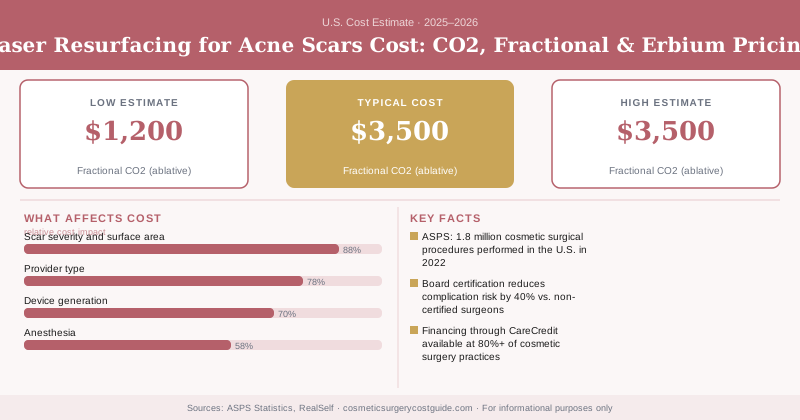
A single fractional CO2 session for acne scars runs $1,200 to $3,500 — and most people need two or three of them. That’s the part the glossy before-and-after photos never mention.
Here’s the thing about scar lasers: they’re not all the same, and the price gap between them is huge. The type of laser, the depth your scars sit at, and how many passes your face needs all move the number. Let’s break down what you’re actually paying for.
What laser resurfacing for acne scars costs
| Laser Type | Cost Per Session | Sessions Needed | Downtime |
|---|---|---|---|
| Fractional CO2 (ablative) | $1,200–$3,500 | 1–3 | 7–14 days |
| Erbium:YAG (ablative) | $1,000–$2,500 | 1–3 | 5–10 days |
| Fractional non-ablative (Fraxel) | $750–$1,500 | 3–5 | 1–3 days |
| Pulsed-dye / vascular (red scars) | $300–$600 | 3–6 | Minimal |
Why CO2 costs the most
Fractional CO2 is the heavy hitter. It vaporizes microscopic columns of skin and triggers a deep collagen-rebuilding response, which is why it’s the go-to for deep boxcar and rolling scars. It’s also why it costs the most and lays you up for one to two weeks of redness and peeling.
Erbium lasers do something similar but with less heat spread, so recovery is a touch shorter and the price dips slightly. For shallower scars or darker skin tones — where aggressive heat raises the risk of pigment changes — many dermatologists steer you toward non-ablative laser skin resurfacing instead. It’s gentler, cheaper per session, and needs more visits.
Acne is staggeringly common, which is partly why this market is so big. The American Academy of Dermatology reported in 2024 that acne affects up to 50 million Americans annually, making it the most common skin condition in the country. A meaningful slice of those people end up with scarring that no cream will touch.
Budget for the full course, not one session. A realistic plan for moderate-to-severe acne scars is 2–3 fractional CO2 sessions at $1,200–$3,500 each — so $2,400 to $10,500 total. Non-ablative routes spread the cost over more visits but cost less per appointment. Ask your provider for a written multi-session estimate before you commit to the first treatment.
What changes your price
Geography matters more than people expect. A coastal-city dermatology practice often charges double a Midwest clinic for the identical laser. Beyond location, these factors move your quote:
- Scar severity and surface area — full-face costs more than treating two cheeks
- Provider type — a board-certified dermatologist or plastic surgeon charges more than a med-spa tech, but the safety margin on ablative lasers is worth it
- Device generation — newer machines with better cooling command premium pricing
- Anesthesia — deeper CO2 work sometimes needs nerve blocks or sedation, adding $200–$500
Lasers aren’t always the best value
Lasers shine on textural, atrophic scarring. But they’re not the only tool, and sometimes not the smartest spend. For rolling scars tethered down by scar bands, microneedling or radiofrequency microneedling like Morpheus8 can deliver comparable results at a lower per-session price. Mild discoloration left behind by old breakouts often responds to a series of chemical peels for a fraction of laser pricing.
Ablative lasers on Fitzpatrick skin types IV–VI carry a real risk of post-inflammatory hyperpigmentation and, rarely, permanent pigment loss. If you have a medium-to-deep skin tone, only work with a provider experienced in treating skin of color — and ask specifically what device and settings they’ll use. The wrong laser on the wrong skin can create a problem worse than the original scars.
Does insurance cover it?
Almost never. Acne scarring is classed as cosmetic, so you’re paying out of pocket. The exception is active, severe cystic acne treatment — but that’s a different conversation than scar revision. Because the total runs into the thousands, most clinics offer payment plans; our guide to cosmetic surgery financing walks through the options.
The Aesthetic Society’s 2023 statistics showed skin-tightening and resurfacing procedures climbing year over year as non-surgical demand keeps growing — so expect competitive pricing in markets with several clinics, and shop around.
Bottom line
Plan on $2,400 to $10,500 for a complete fractional CO2 course, less if you go non-ablative. The single most important variable isn’t the laser brand — it’s the hands running it. Pay for experience, get a multi-session quote upfront, and weigh whether microneedling-based options might get you most of the way there for less.
Frequently Asked Questions
A single fractional CO2 session typically costs $1,200 to $3,500, though most patients require two to three sessions for meaningful results, bringing total treatment costs to $3,600–$10,500. The exact price depends on the treatment area size, scar depth, and your surgeon's location and experience level.
Most insurance plans classify laser resurfacing for acne scars as cosmetic and do not cover it, leaving patients responsible for the full out-of-pocket cost. However, if scarring resulted from trauma, injury, or burns rather than acne alone, some insurers may cover a portion—it's worth calling your plan to ask.
Most patients need 2–3 sessions spaced 6–8 weeks apart to see optimal results, since each pass gradually resurfaces the skin without causing excessive damage. Recovery between sessions typically takes 1–2 weeks, during which you'll experience redness and peeling before the skin fully heals.