The hollow, gaunt look that creeps in after 40 isn’t permanent — and fixing it doesn’t take surgery. Cheek filler restores midface volume for $1,200 to $3,000 a session, and for men the aim is angular structure, not soft roundness.
As you age, the fat pads in your cheeks deflate and slide downward. That flattens the midface, deepens the lines around your mouth, and can make you look tired or older than you are. Cheek filler rebuilds that lost volume and, in younger men, adds definition to the cheekbone for a more chiseled look. The masculine goal is high, sharp structure — never plump apples.
Session pricing
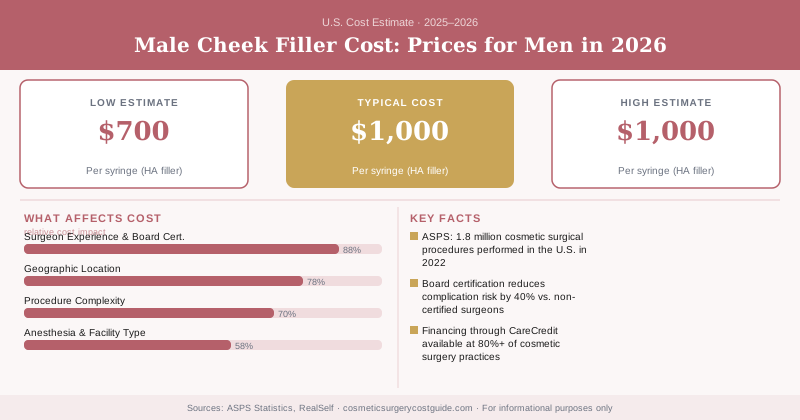
Cheek filler is priced per syringe of hyaluronic acid or a longer-lasting calcium-based filler. Men typically need two to three syringes.
| Filler Detail | Cost |
|---|---|
| Per syringe (HA filler) | $700 – $1,000 |
| Typical male session (2–3 syringes) | $1,400 – $3,000 |
| Longer-lasting filler (per syringe) | $900 – $1,300 |
| Annual maintenance | $1,400 – $3,000 |
Filler dominates the minimally invasive category — the American Society of Plastic Surgeons recorded over 5.3 million soft-tissue filler procedures in 2023. Men are an expanding share, frequently combining cheek work with jawline filler to define the whole midface and lower face together.
Plan on $1,200 to $3,000 for a male cheek filler session, with most men needing 2 to 3 syringes. HA filler lasts 12 to 18 months in the cheeks, so budget similar annual maintenance. Longer-lasting fillers cost more per syringe but stretch the interval between visits.
Why the male approach differs
Women’s cheek filler often emphasizes the soft “apple” of the cheek for a youthful roundness. That’s exactly what men want to avoid. Male cheek augmentation targets the upper, lateral cheekbone to add angularity and a sharper shadow line. If your injector only has experience plumping female cheeks, you may end up looking softer rather than stronger. Ask for male before-and-afters.
Don’t overfill the cheeks. Too much product creates a puffy, “pillow face” look that ages badly and reads as obviously done. Migration and a heavy midface are real risks with aggressive injection. The cheek area also has important blood vessels, so an experienced medical injector matters for safety, not just aesthetics.
What drives your cost
The number depends on how much volume you’ve lost (more deflation needs more product), the filler type (longer-lasting products cost more per syringe), your injector’s credentials, and your city. Because men often need more product than women to achieve structure, expect to land toward the higher end of the per-session range.
Filler versus surgery
For pure volume loss, filler is the easy, no-downtime answer. But if you’ve lost a lot of facial volume and skin is also sagging, filler alone can look unnatural — that’s when a facelift or fat grafting enters the conversation. A good provider tells you when filler is the right tool and when you’d just be throwing money at the wrong problem.
Downtime and safety
This is a lunch-break treatment. Expect mild swelling and the occasional bruise for a few days. You’ll look normal within a week and can resume exercise in 24 to 48 hours. Our cosmetic surgery recovery guide covers reducing bruising after facial injections.
HA versus longer-lasting fillers
Not all cheek filler is the same, and the choice affects both your cost and how often you’re back in the chair. Standard hyaluronic acid fillers are soft, natural-feeling, and fully reversible with an enzyme if you don’t like the result — they typically last 12 to 18 months in the cheeks. Calcium-based or other longer-lasting fillers cost more per syringe and aren’t reversible, but they can hold for two years or more and provide stronger structural lift, which suits the angular male aesthetic. For a first-timer, most injectors recommend starting with HA because of that reversibility safety net. Once you know you like the look, switching to a longer-lasting product can cut down your annual maintenance visits and, over time, your total spend.
Paying for it
Cheek filler is cosmetic, so there’s no insurance coverage. Most men pay per session; for larger combination treatments see our cosmetic surgery financing guide. And because cheek injection carries real vascular risk, only let a board-certified plastic surgeon or dermatologist do it.
For a man wanting a stronger, less tired midface without surgery, cheek filler is a smart, reversible option. Keep it structural, not soft, and you’ll look sharper — not “done.”
Frequently Asked Questions
Male cheek filler typically costs $1,200 to $3,000 per treatment session in 2026. The exact price depends on the amount of filler used, the provider's experience level, and your geographic location, with urban areas and board-certified dermatologists generally charging toward the higher end of the range.
No, cheek filler is considered a cosmetic procedure and is not covered by any major US health insurance plans, including Medicare and Medicaid. You should expect to pay the full cost out-of-pocket, though some practices offer financing options or payment plans to spread the expense over several months.
Cheek filler results typically last 9 to 12 months before the body gradually absorbs the product, meaning most men schedule touch-up sessions annually to maintain results. Initial swelling subsides within 24 to 48 hours, and you can return to normal activities immediately, though strenuous exercise should be avoided for the first week.