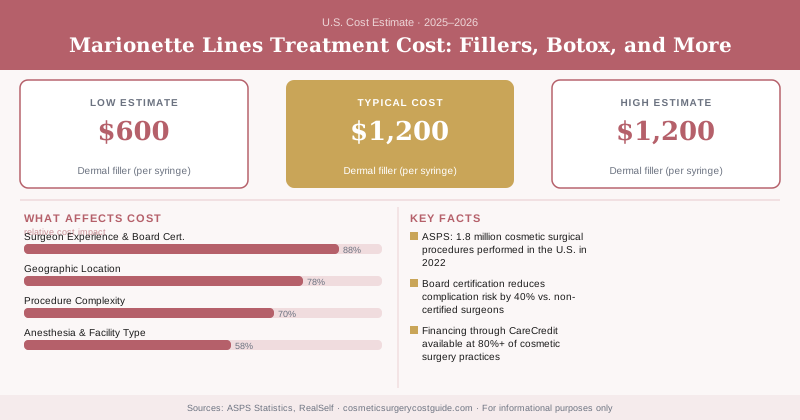
In 2010, smoothing the lines that run from the corners of your mouth down to your chin pretty much meant a facelift. Today it’s a 20-minute filler appointment. Marionette lines — named because they make your face look a bit like a puppet’s hinged jaw — are one of the most treatable signs of aging, and you’ve got several price points to choose from.
Here’s what each route costs and how to spend smart.
What marionette line treatment costs
These creases come from a mix of volume loss in the cheeks, sagging skin, and the downward pull of the muscles around your mouth. Treatment usually means filling, lifting, or relaxing — sometimes all three.
| Treatment | Average Cost | Lasts |
|---|---|---|
| Dermal filler (per syringe) | $600–$1,200 | 9–18 months |
| Botox (DAO muscle) | $100–$300 | 3–4 months |
| RF microneedling (per session) | $600–$1,200 | 12+ months |
| Thread lift (lower face) | $1,500–$4,000 | 12–18 months |
| Full treatment (filler + Botox) | $1,200–$3,000 | varies |
The American Society of Plastic Surgeons logged over 5.3 million soft-tissue filler treatments in 2023, and perioral (around-the-mouth) correction is one of the top requests. Botox use has climbed too, with more than 9.4 million neuromodulator procedures the same year.
Filler is the workhorse here
For most people, dermal fillers are the first and most effective move. A hyaluronic acid filler placed in and around the marionette lines restores volume and softens the crease almost immediately. Expect $600–$1,200 per syringe, and most patients need one to two syringes to address both sides.
The catch is longevity — HA fillers in this mobile part of the face break down faster than in static areas, so you may be back within a year.
Budget $1,200–$3,000 for meaningful marionette line correction. Filler does the heavy lifting at $600–$1,200 per syringe, often combined with a small amount of Botox to relax the muscle that pulls the corners of your mouth down. Skin tightening adds longevity but adds cost. Treat the cause, not just the line.
Where Botox fits in
A small dose of Botox in the depressor anguli oris (the muscle that drags your mouth corners downward) can complement filler beautifully. It’s cheap — often $100–$300 — and it stops the muscle from deepening the crease. On its own it won’t erase an established line, but paired with filler it extends and improves the result.
When you need more than injectables
Deep marionette lines driven by serious skin laxity won’t fully respond to filler. Overfilling to compensate just creates a heavy, puffy lower face. In those cases, skin tightening with microneedling RF or a thread lift addresses the underlying sag. These cost more but target the real culprit.
The most common — and expensive — mistake is chasing marionette lines with syringe after syringe of filler when the actual problem is descended cheek volume. Filling the lines directly can look unnatural and cost you more over time. A skilled injector often lifts the lines by restoring cheek volume above them instead. Ask about this approach.
How to control the cost
Don’t pay for both sides if only one is significant. Ask your injector whether starting with one syringe makes sense before committing to two. Combining a modest filler dose with inexpensive Botox often beats loading up on filler alone. And if a provider suggests a thread lift right away for mild lines, get a second opinion — that’s often premature.
Financing is widely available in aesthetics, but interest can be steep; our cosmetic surgery financing guide breaks down the better and worse options.
The bottom line
Marionette line treatment runs $1,200–$3,000 for most people, with filler as the foundation and Botox as a smart, low-cost add-on. The trick is treating the cause — whether that’s lost volume, an overactive muscle, or sagging skin — instead of repeatedly filling the crease itself. Done right, you’ll spend less and look more natural.
Frequently Asked Questions
Marionette line treatment typically costs $600–$1,200 per syringe of filler, with most patients requiring 1–2 syringes for a total treatment cost of $1,200–$3,000. Costs vary based on the type of filler used, your geographic location, and the injector's experience level.
No, marionette line treatment with fillers or Botox is considered cosmetic and is not covered by health insurance plans. You will pay the full cost out-of-pocket, though some providers offer payment plans or financing options to help spread the expense over several months.
Most dermal fillers used for marionette lines last 6–12 months depending on the product and your metabolism, with hyaluronic acid fillers typically lasting toward the shorter end of that range. Most patients schedule touch-up appointments every 9–12 months to maintain results, meaning an annual cost of $1,200–$3,000 for ongoing treatment.