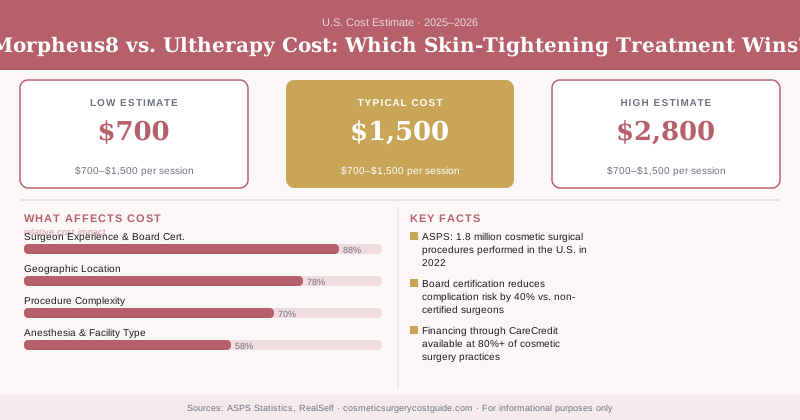
Both promise to tighten sagging skin without a scalpel. Both use energy to trigger collagen. And both get pitched as the non-surgical answer to a facelift. So why does one usually cost a session-by-session fee while the other often runs $2,800 in a single sitting? The technology under the hood is completely different, and that drives the price.
Non-surgical procedures keep climbing in popularity. The Aesthetic Society’s 2023 data showed minimally invasive and energy-based treatments far outpacing surgical procedures by volume, with millions performed each year. Skin tightening sits right in that boom.
| Morpheus8 | Ultherapy |
|---|---|
| $700–$1,500 per session | ~$2,800 (often one visit) |
| Microneedling + radiofrequency | Micro-focused ultrasound |
| Usually 3 sessions | Usually 1 session |
| Some downtime, tiny marks | Essentially no downtime |
| Reaches mid-deep dermis | Reaches deep SMAS layer |
How they actually work
Morpheus8 combines microneedling with radiofrequency. Tiny needles create channels in the skin and deliver heat at adjustable depths. That heat remodels collagen and can also tackle texture, pores, and mild fat. You’ll usually need a series of about three sessions spaced weeks apart, so factor the full course into your budget.
Ultherapy uses micro-focused ultrasound to deliver energy deep, down to the SMAS layer that surgeons tighten during a facelift. It’s typically a single session, and it’s the only device with FDA clearance to “lift” the brow, chin, and neck.
The cost-per-result math
Per visit, Morpheus8 looks cheaper. But you need a series. Three sessions at $1,200 each lands near $3,600, which can edge past a single Ultherapy treatment. So the “cheaper” option isn’t always cheaper once you total the course.
That said, Morpheus8 does double duty on skin texture and pores, which Ultherapy doesn’t really address. If you want tightening plus a smoother surface, the Morpheus8 spend may cover two concerns at once. For a deeper price breakdown, see our Morpheus8 cost guide.
Want deep lifting with zero downtime and one appointment? Ultherapy is built for that. Want tightening plus texture and pore improvement, and you don’t mind a short series with a little downtime? Morpheus8 covers more ground. Neither replaces a facelift for serious sagging.
Downtime and comfort
Ultherapy can feel intense during treatment, brief deep zaps, but there’s basically no recovery. You go back to normal that day.
Morpheus8 leaves tiny pinpoint marks and some redness for a few days, since it physically needles the skin. Numbing cream helps a lot. Plan a low-key weekend after each session.
Neither treatment lifts skin like surgery. If you have moderate-to-heavy sagging, these devices will underwhelm you. Honest providers say so. Be cautious of clinics promising “facelift results” from any energy device, and ask to see before-and-after photos of patients with your level of laxity.
Who’s the right candidate?
Both work best on mild-to-moderate laxity, ideally before sagging gets advanced. Younger patients in their late 30s to 50s with early jowling or neck softening tend to be happiest.
If your sagging is significant, you’re in surgical territory, and our facelift cost guide explains what a real lift costs and when it’s the better investment.
How long results last
Both stimulate your own collagen, so results build over two to three months and generally last around a year, sometimes longer. Maintenance treatments keep the effect going. Many patients do an annual touch-up. Budget for that recurring cost rather than treating it as one-and-done.
Pain and the patient experience
Comfort differs more than you’d expect. Ultherapy’s deep ultrasound can feel like sharp, brief bursts of heat, and some patients find it genuinely uncomfortable, though it’s over quickly. Providers can offer numbing or medication to take the edge off. Morpheus8 numbs the skin with topical cream first, so the needling is tolerable, but the trade-off is the visible pinpoint marks afterward. Knowing which discomfort you’d rather deal with, brief intensity versus a few days of looking a little marked, can tip the decision as much as the price does.
Bottom line
Pick Ultherapy for deep lifting with no downtime in a single visit. Pick Morpheus8 for combined tightening and skin-quality improvement across a short series. And if your laxity is past the “mild” stage, save your money and explore surgery. Either way, our cosmetic surgery financing guide can help you spread the cost.
Frequently Asked Questions
Morpheus8 typically costs $700–$1,500 per session, while Ultherapy averages around $2,800 for a single treatment. The price difference reflects their different underlying technologies: Morpheus8 uses radiofrequency microneedling and is often priced per session, whereas Ultherapy uses focused ultrasound and is typically quoted as a one-time flat fee.
Neither Morpheus8 nor Ultherapy is covered by insurance because both are classified as elective cosmetic procedures. Patients should expect to pay the full cost out-of-pocket, though some practices offer financing plans or payment packages to spread the expense over several months.
Most patients benefit from 1–3 Morpheus8 sessions spaced 4–6 weeks apart, with results visible within 2–3 months as collagen rebuilds. Results typically last 12–18 months, meaning you may need maintenance sessions annually if you want to sustain the skin-tightening effects.