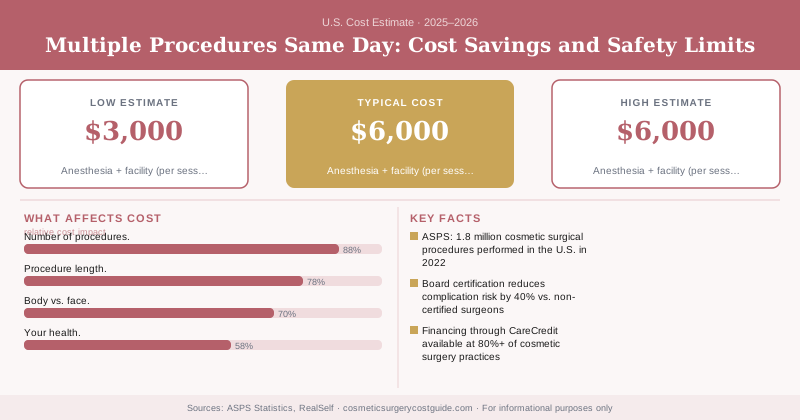
42% of the cost of a cosmetic surgery isn’t the surgeon — it’s the anesthesia, the facility, and the overhead around the operation. That single fact explains why doing multiple procedures the same day saves so much money. You pay that overhead once instead of once per surgery.
This is the core economics behind every combination procedure, from a mommy makeover to a full-face package. When two or three operations happen under one anesthetic in one operating room, the surgeon’s time goes up — but the fixed costs around the surgery don’t multiply. That’s where the savings live.
The approach is common and well-supported. The Aesthetic Society and ASPS both track combination procedures as a standard part of practice, with surgeons routinely staging compatible operations together. The savings are real, but so are the limits.
What Same-Day Combining Saves
| Scenario | Cost |
|---|---|
| Anesthesia + facility (per session) | $3,000–$6,000 |
| Two procedures, separate days | $14,000–$30,000 |
| Two procedures, same day | $11,000–$24,000 |
| Three procedures, separate days | $22,000–$45,000 |
| Three procedures, same day | $15,000–$35,000 |
Where the Savings Come From
Every separate surgery means a fresh $3,000–$6,000 for anesthesia and the operating room. Do two procedures on different days and you pay that twice. Three procedures, three times.
Combine them and you pay it once. That’s the whole game. A liposuction plus a breast augmentation done together saves the overhead of a second surgical day — typically $3,000–$6,000. Stack a third compatible procedure and you save again.
Combining multiple procedures the same day saves $3,000–$10,000 because you pay the anesthesia and facility fees once instead of per surgery. You also recover once. But surgeons cap total operating and anesthesia time — usually around 6 hours — for safety, so not every combination fits in one day. The savings are real only within that safe window.
What Drives the Variation
Number of procedures. Two is easy to combine; three pushes the time limit; four often requires splitting.
Procedure length. A quick breast lift pairs with almost anything. A long tummy tuck plus a facelift may exceed safe time.
Body vs. face. Combining body procedures is common. Combining a long facial surgery with major body work is where surgeons get cautious.
Your health. Underlying conditions shorten the safe anesthesia window. Honest medical screening determines what’s possible.
The 6-Hour Rule
Here’s the safety boundary that governs everything. Most surgeons aim to keep total anesthesia time under 6 hours, because complication risk — blood clots, infection, anesthesia issues — climbs with longer operations. Your anesthesia cost is the fee you’re consolidating, but it’s also the safety variable.
A good surgeon will tell you when a combination is too much for one day and recommend splitting it. That’s not upselling — it’s the responsible call.
Be wary of any surgeon who agrees to combine four or five procedures in a single marathon session to win your business. Operating times beyond 6 hours sharply raise the risk of blood clots and other serious complications. The bundle discount is never worth an unsafe operation — a surgeon who pushes back on an overloaded plan is protecting you.
Financing Combined Surgery
Insurance won’t cover cosmetic combinations. Plan to pay out of pocket or finance the total.
Most practices offer financing through CareCredit or Prosper. A $15,000 combined day on a 24-month plan runs around $680/month — confirm the APR before signing, since longer terms often carry 14–26% interest. Verify your surgeon’s credentials through the board-certified plastic surgeon guide, and demand an itemized quote that shows a single shared anesthesia and facility fee. That line is how you prove the same-day savings are real.
Frequently Asked Questions
Combining two or three procedures in one surgery session typically saves $3,000–$10,000 compared to scheduling them separately. This savings comes from paying a single anesthesia fee and facility charge instead of duplicating these costs for each separate procedure—anesthesia and facility overhead account for roughly 42% of total cosmetic surgery costs.
Most health insurance plans do not cover elective cosmetic procedures, whether done individually or combined, since they are considered non-medically necessary. However, if one procedure has a reconstructive or medical component (such as septorhinoplasty for breathing problems), that portion may be covered while cosmetic elements remain out-of-pocket, typically ranging from $5,000–$15,000 total out-of-pocket for combination procedures.
Most surgeons cap combined procedures at approximately 6 hours of total operating time to maintain safety and minimize anesthesia risks. This time constraint typically allows two to three procedures to be safely combined—for example, a mommy makeover (tummy tuck, breast augmentation, liposuction) or a full-face package—though your surgeon will evaluate your specific health and candidacy.