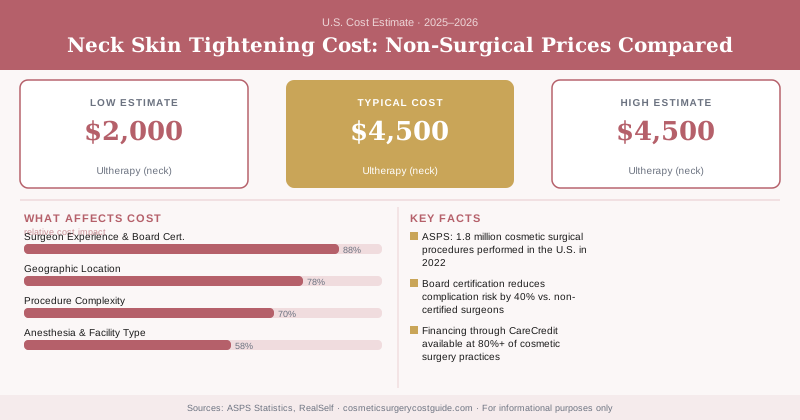
The neck always tells on you. You can have a smooth, well-cared-for face and still get betrayed by crepey, sagging neck skin — it’s often the first place aging shows and the last place people think to treat. If you’re not ready for a neck lift, non-surgical tightening can help, and it runs roughly $1,500 to $5,000 depending on the technology. Here’s what each option does and what you’ll really pay.
What neck skin tightening costs
The neck has thin skin and a broad muscle (the platysma) underneath, so tightening means heating the skin to stimulate collagen, sometimes alongside relaxing that muscle.
| Treatment | Average Cost | Sessions |
|---|---|---|
| Ultherapy (neck) | $2,000–$4,500 | 1 |
| RF microneedling (Morpheus8) | $700–$1,500/session | 3–4 |
| Surface RF tightening | $500–$1,200/session | 4–6 |
| Botox (platysmal bands) | $300–$800 | every 3–4 mo |
| Neck lift (surgical) | $5,000–$11,000 | 1 |
The American Society of Plastic Surgeons recorded more than 2.5 million minimally-invasive tightening and energy procedures in 2023, and the neck and lower face are among the most requested zones. The ASPS notes that focused ultrasound and RF devices show the most consistent results for mild to moderate neck laxity.
Ultherapy: the deep-tightening standard
Ultherapy uses focused ultrasound to heat the deep foundational layer of the neck — the same layer a surgeon tightens in a lift — triggering new collagen over two to three months. It’s typically a single session at $2,000–$4,500, which sounds steep until you compare it to repeat-session devices. For moderate laxity it’s a popular one-and-done option.
Non-surgical neck tightening costs $1,500–$5,000 and works best on mild to moderate sagging. Ultherapy is the leading single-session choice; Morpheus8 and surface RF require a series but cost less per visit. A small Botox dose can soften vertical neck bands. For loose, hanging neck skin, a surgical neck lift gives more durable value.
RF and microneedling for skin quality
If your main issue is crepey texture plus mild laxity, Morpheus8 RF microneedling tightens and smooths at once across a series of three to four sessions. Surface radiofrequency tightening is gentler and cheaper per session but needs more visits. These build results gradually rather than in one go.
Don’t forget the muscle
Sometimes what looks like loose skin is actually the vertical platysmal bands tightening up. A modest dose of Botox can relax those bands and smooth the neck’s appearance for a few months — often a cheap, high-impact add-on when bands are the real problem.
Be realistic about what energy devices can do for a heavy “turkey neck.” If you have significant hanging skin or strong, separated platysmal bands, non-surgical tightening will underwhelm — and several thousand dollars of sessions can’t replace a surgical neck lift. A good provider will tell you honestly which camp you’re in before taking your money.
Weighing it against surgery
For severe laxity, our non-surgical vs surgical cost guide is worth a read. A neck lift costs more upfront but lasts many years, while non-surgical maintenance recurs. The crossover point depends on how loose your skin is and how long the non-surgical results hold for you.
How to save
Get an honest candidacy assessment first so you don’t pay for a treatment that can’t deliver. For series-based devices, pay per session so you can stop at your goal. And if you choose a single big-ticket option like Ultherapy, ask whether financing makes sense — our cosmetic surgery financing guide covers reasonable terms.
The bottom line
Neck skin tightening without surgery runs $1,500–$5,000, with Ultherapy as the go-to single session and Morpheus8 or RF as series-based alternatives. Match the device to whether your issue is skin, texture, or muscle bands — and recognize when a surgical neck lift is genuinely the better value for heavy sagging.
Frequently Asked Questions
Non-surgical neck tightening typically costs between $1,500 and $5,000 per treatment, depending on the technology used. Ultherapy generally ranges from $1,500–$3,000, radiofrequency treatments run $1,500–$3,500, and Morpheus8 falls between $2,500–$5,000 for a single session.
Insurance does not cover non-surgical neck tightening because it is considered a cosmetic procedure rather than medically necessary treatment. You will pay the full cost out-of-pocket, though some practices offer financing plans or payment packages to spread costs over several months.
Most patients need 1–3 sessions spaced 4–6 weeks apart to see optimal results, with full effects appearing over 2–3 months as collagen continues to rebuild. Recovery is minimal with most non-surgical options—you can return to normal activities immediately, though you may experience mild redness or swelling for a few hours after treatment.