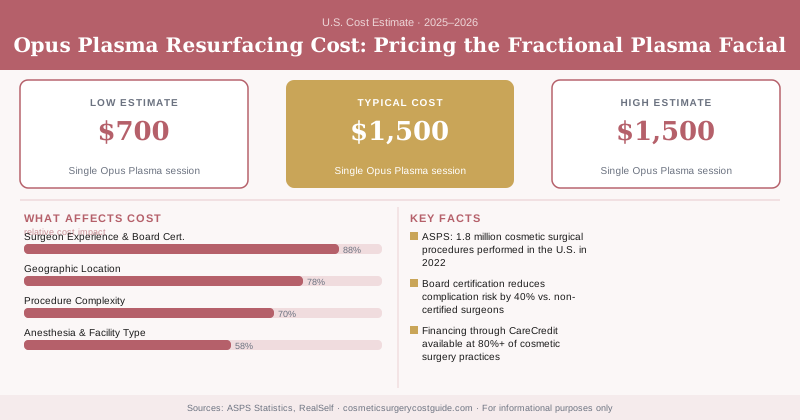
What does it cost to resurface your skin with plasma energy instead of a laser? For Opus Plasma, the answer is usually $700 to $1,500 per session, with most patients booking a series of two to three treatments that totals $2,000 to $4,000.
Opus Plasma comes from Alma Lasers and uses fractional radiofrequency combined with plasma energy to renew the skin’s surface and stimulate collagen underneath. It cleared the FDA pathway for dermatological procedures, and its draw is that it claims to deliver laser-like resurfacing with shorter downtime, typically a few days of redness and flaking rather than a week or more.
Breaking Down the Cost
| Treatment Detail | Typical Cost |
|---|---|
| Single Opus Plasma session | $700 – $1,500 |
| Series of 2–3 sessions | $2,000 – $4,000 |
| Add-on neck or chest | $300 – $600 extra |
| Numbing cream | Usually included |
The single biggest cost driver is how many sessions you need, which depends on your goals. Mild texture and tone issues might resolve in two sessions. Deeper wrinkles, acne scars, or significant sun damage often require the full series.
Why the Price Varies So Much
Provider type matters. A board-certified dermatologist’s office tends to charge more than a med spa, though you’re often paying for tighter oversight. Treatment area size factors in too, and any add-ons for the neck or décolletage push the total up. As always, big-city pricing outpaces smaller markets.
Plasma vs Laser: The Money Question
People shopping for Opus Plasma are usually also pricing lasers. Fractional CO2 and erbium devices can run $1,000 to $3,000 per session and may need more downtime. Opus markets itself as a gentler middle ground. If you’re comparing energy-based resurfacing options head to head, our guide to laser skin resurfacing lays out the laser side of the ledger.
According to the American Society of Plastic Surgeons, minimally invasive skin treatments numbered in the millions in 2023, and resurfacing procedures remain among the most requested. The category keeps growing because patients want results without surgery’s recovery.
Plan on $700 to $1,500 per Opus Plasma session and $2,000 to $4,000 for a full series. It promises laser-like resurfacing with less downtime, making it a middle option between gentle and aggressive treatments.
Is the Downtime Really Shorter?
Opus markets shorter recovery, but “shorter” is relative. Expect redness, a sandpaper texture, and some flaking for several days. Plan it around a low-key week, not a vacation photo shoot the next morning.
Plasma resurfacing can cause temporary pigment changes, especially in deeper skin tones. A reputable provider will assess your skin type and may recommend a test patch first. Don’t skip the consultation.
Pairing With Other Treatments
Many patients combine resurfacing with collagen-building tools. Microneedling addresses texture from a different angle, while neuromodulators like Botox handle dynamic wrinkles that resurfacing can’t touch. A thoughtful provider will map out which tool tackles which concern instead of selling you everything.
Paying for It
This is elective, so insurance won’t help. Most clinics offer package pricing or financing for a multi-session series. If you’re spacing payments over months, see our overview of cosmetic surgery financing.
Bottom line: get a consultation, ask how many sessions your specific concerns require, and confirm the per-session price before signing. A vague “it depends” without a number is a reason to keep looking.
Frequently Asked Questions
A single Opus Plasma session typically costs between $700 and $1,500, depending on the treatment area size and your provider's location and experience. Most patients require a series of two to three treatments, bringing the total investment to $2,000 to $4,000 for a complete treatment plan.
Opus Plasma is considered a cosmetic procedure and is not covered by health insurance plans, meaning you will pay the full cost out-of-pocket. Some practices offer payment plans or financing options through medical credit cards like CareCredit to help spread the expense over several months.
Most patients benefit from two to three Opus Plasma treatments spaced 4 to 6 weeks apart to allow proper skin healing and collagen remodeling between sessions. Results continue to improve for several months after the final treatment as the skin's natural collagen production increases.