Why fix your nose without looking at your chin? It’s a question good facial surgeons ask constantly — because the two features define your profile together, and changing one without the other can throw the balance off.
A weak or recessed chin makes a large nose look even larger. That’s basic facial proportion. So surgeons frequently pair a rhinoplasty with a chin implant (genioplasty) to create harmony rather than just shrinking one feature in isolation. The combination is sometimes called “profileplasty,” and it’s one of the smartest pairings in facial surgery.
It’s also popular. ASPS has reported rhinoplasty as one of the most-performed surgical procedures in the US for years, and chin augmentation has grown steadily as surgeons increasingly assess the face as a whole. Pairing the two is routine for surgeons focused on profile balance.
What the Combo Costs
| Combination | Cost |
|---|---|
| Rhinoplasty alone | $7,000–$15,000 |
| Chin implant alone (surgeon fee) | $3,000–$6,000 |
| Anesthesia + facility (per session) | $2,500–$5,000 |
| Both done separately (total) | $13,000–$25,000 |
| Both combined (one session) | $10,000–$20,000 |
Why Combining Costs Less
The savings come from the same place they always do. Two separate facial surgeries mean two anesthesia fees and two facility fees. Combine them into one operation and that overhead is charged once — a savings of $3,000–$5,000.
A standalone rhinoplasty runs $7,000–$15,000, and a chin implant on its own is $3,000–$6,000 in surgeon fees. Adding the chin work during a rhinoplasty barely extends the operating time, which is why the combined price is so much lower than doing them apart.
A rhinoplasty and chin implant address profile balance together — a recessed chin makes a large nose look bigger, so changing both creates harmony. Combined in one session, they cost $10,000–$20,000, about $3,000–$5,000 less than separate surgeries, because you share a single anesthesia and facility fee. Ask your surgeon to assess your full profile, not just your nose.
What Drives the Variation
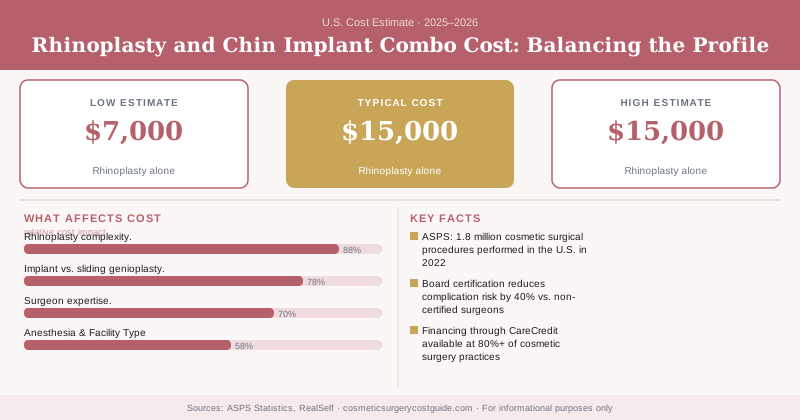
Rhinoplasty complexity. A primary cosmetic nose job costs less than one rebuilding a deviated septum or revising prior surgery. The nose is the bigger variable here.
Implant vs. sliding genioplasty. A silicone or porous chin implant is cheaper than a sliding genioplasty that repositions the jawbone. Your anatomy and the degree of correction decide which you need.
Surgeon expertise. Profile work is artistry. Verify credentials through the board-certified plastic surgeon guide and look hard at before-and-after photos of profiles, not just front views.
The Safety Window
This combination runs 2–4 hours of operating time, well inside the limits surgeons use. Your anesthesia cost is the fee you’re consolidating, so confirm the quote shows it as one shared line rather than billing as if these were two events.
Recovery Reality
The nose drives recovery here. Expect a splint for about a week, visible bruising and swelling for 2 weeks, and — the part people forget — up to a full year for the final refined shape to emerge as residual swelling resolves. The chin implant heals faster and rides along on the same recovery.
Combining means one stretch of downtime instead of two separate ones.
Don’t judge your result at two weeks. Rhinoplasty swelling masks the final shape for many months, and the tip can take a full year to settle. Patients who panic early and push for revisions too soon often regret it — give your nose time before deciding anything is wrong.
Financing the Combo
Insurance won’t cover the cosmetic portion of either procedure. The narrow exception: if the rhinoplasty corrects a documented breathing obstruction, that functional part may be partially eligible — get pre-authorization in writing.
For the rest, practices offer financing through CareCredit or Prosper. A $14,000 combo on a 24-month plan runs around $610/month — confirm the APR before signing, since longer terms often carry 14–26% interest. Ask for an itemized quote with one shared anesthesia fee to verify the combination savings are real.
Frequently Asked Questions
A combined rhinoplasty and chin implant procedure typically costs $10,000–$20,000 total, which is about $3,000–$5,000 less than having the two surgeries performed separately. The exact price depends on surgeon experience, geographic location, facility fees, and the complexity of your case.
Insurance rarely covers chin implants since they are purely cosmetic procedures, and typically does not cover rhinoplasty unless it is medically necessary to correct breathing problems. Most patients pay out-of-pocket for the combined procedure, though some surgeons offer financing plans to spread costs over 12–24 months.
Yes, combining both procedures in a single surgery session is standard practice and actually reduces total recovery time and costs compared to two separate surgeries. Most surgeons perform both under one anesthesia, with combined operative time of 2–3 hours, and recovery typically takes 1–2 weeks before returning to normal activities.