Sarah paid $15 for an at-home skin tag removal kit. Three weeks later she was at a dermatologist’s office dealing with an infected wound — because what she thought was a skin tag wasn’t one. That’s not a rare story.
Skin tags are extremely common and completely benign. The American Academy of Dermatology estimates that nearly half of all adults develop at least one skin tag during their lifetime. But not every small soft growth is a benign skin tag, and the at-home methods that work fine on genuine tags can cause real harm if applied to the wrong thing.
Here’s the honest cost breakdown for every method — and where the lines are.
Office Removal Cost: What You’ll Actually Pay
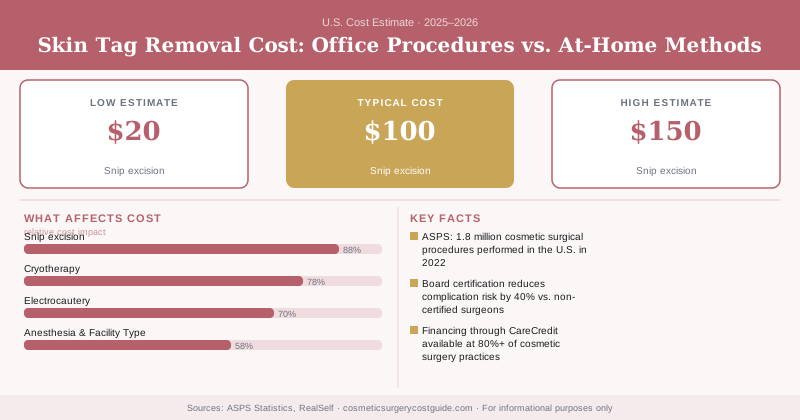
| Removal Method | Cost (1–3 Tags) | Per Additional Tag | Appropriate Locations | Recovery |
|---|---|---|---|---|
| Snip excision | $100–$150 | $20–$40/tag | Body, face (not eyelid) | 7–10 days (scab) |
| Cryotherapy (liquid nitrogen) | $150–$250 | $25–$50/tag | Body, face (not eyelid) | 7–14 days |
| Electrocautery | $150–$300 | $25–$50/tag | Body, face (not eyelid) | 5–10 days |
| Ligation (office) | $100–$200 | $20–$40/tag | Body only | 7–10 days |
| Eyelid removal (specialist) | $200–$500 | Varies | Eyelid only | 5–7 days |
| Bundle (10+ tags, single visit) | $300–$600 flat | Included | Body | Varies |
At-Home Options: What Works and What Doesn’t
| At-Home Method | Cost | Works For | Never Use On |
|---|---|---|---|
| Cryotherapy kit (Compound W Freeze Off) | $10–$30 | Small tags under 5mm, neck and body | Face, groin, near eyes |
| Tag band / string ligation | $10–$20 | Small body tags | Face, neck (nerve proximity), eyelids |
| Salicylic acid | $5–$15 | Warts — not skin tags | Anywhere near eyes |
How Each Office Method Works
Snip excision is the most common approach. A topical or injected anesthetic numbs the area; then a dermatologist cuts the tag at its base with small sterile scissors. Done in under 2 minutes per tag. A small scab forms and falls off in 7–10 days. The removed tissue can be sent for biopsy if there’s any uncertainty — which is the reason snip excision beats every at-home method on safety.
Cryotherapy (liquid nitrogen) freezes the tag. The tissue darkens, scabs, and sloughs off over 1–2 weeks. Works well for small-to-medium tags and may need a second application for larger ones. Slightly more discomfort than snip excision, but no bleeding.
Electrocautery uses electric current to burn through the stalk and seal the base simultaneously. Good for tags that tend to bleed. You’ll smell a brief burning odor — completely normal.
Ligation (in-office) ties off the blood supply to the stalk; the tag dies and falls off over 5–7 days. Slower than excision but no cutting.
At-Home Methods: When They’re Reasonable
Consumer cryotherapy kits use dimethyl ether propane — cold enough to destroy small skin tags (under 5mm) on the neck, trunk, and arms. They work, but follow instructions exactly: the applicator must contact the tag, not surrounding skin. Results take 7–14 days and sometimes need a second application.
String ligation kits cut off blood supply to the tag’s stalk. The tag darkens and falls off in 7–10 days. It works for small body tags, but carries minor infection risk if the band isn’t placed cleanly. Slower and messier than cryotherapy.
Neither method works for eyelid tags, facial tags near the eyes or lips, or tags in sensitive skin folds.
True skin tags are soft, flesh-colored, smooth, and hang on a visible thin stalk. But not every small growth is a benign tag. See a dermatologist before treating anything that:
- Is dark brown, black, or multicolored
- Has an irregular or jagged border
- Is flat rather than raised on a visible stalk
- Has recently changed in size or color
- Bleeds spontaneously (without injury)
- Is crusted or not healing normally
Dermatofibromas, sebaceous cysts, warts, molluscum contagiosum, and early skin cancers can all be mistaken for benign skin tags. A dermatologist’s visual assessment takes 60 seconds and eliminates the guesswork. If there’s any doubt, don’t treat at home — the cost of a 6-month delay in identifying something malignant is orders of magnitude higher than an office visit.
Eyelid Tags: A Different Category
Eyelid tags must not be treated at home. The eyelid margin contains delicate structures — meibomian glands, lacrimal drainage, the lid margin itself — that can be permanently damaged by thermal, cryogenic, or chemical injury. At-home kits are not designed for this anatomy.
Eyelid skin tags require removal by an ophthalmologist or oculoplastic surgeon. Cost: $200–$500 depending on the provider and tag count. It’s the only appropriate option for this location.
How Many Tags Per Session?
There’s no limit on how many tags a dermatologist will remove in one appointment. In 15–20 minutes, a provider can remove 10–15 small tags. Per-tag pricing drops after the first few — removing 10 tags in one visit typically costs $300–$500, compared to $100–$150 per individual visit if you were to return repeatedly. Bundle everything into one appointment.
Never attempt at-home removal on or near the eyelid. Consumer cryotherapy kits, scissors, or ligation bands near the eyelid can freeze the lid margin, cut into lid structures, or cause cold injury to the cornea. The resulting damage — lid malposition, corneal scarring, lacrimal damage — is costly, difficult to repair, and entirely preventable. Only an ophthalmologist or oculoplastic surgeon should treat eyelid tags.
Bottom Line
Single small body or neck tag? A $15 at-home cryotherapy kit is a reasonable first step. Multiple tags, or any tag you’re not completely certain is benign? Book a dermatologist appointment — budget $150–$300 for the first 2–3 tags, with reduced per-tag pricing after that. Eyelid tags, or anything with dark coloring, irregular borders, or spontaneous bleeding? Don’t touch it at home. The dermatologist visit costs less than getting that wrong.
Frequently Asked Questions
Most dermatologists will remove as many tags as you want in a single visit — 5, 10, even 20 small tags in one 15–20 minute appointment. Providers typically charge a flat fee for the first 1–3 tags, then a reduced per-tag rate for each additional one. Bundling all your skin tag removal into a single visit is almost always cheaper than returning for multiple sessions.
Almost never. Skin tags are classified as a cosmetic condition across virtually all insurance plans because they cause no medical harm. The only documented exceptions involve tags causing genuine functional problems with supporting clinical documentation — for example, a large eyelid tag visibly obstructing vision. Even then, coverage is frequently denied. Plan to pay out of pocket.
Consumer cryotherapy kits (like Compound W Freeze Off) are reasonably safe for small tags on the neck, trunk, or arms when used exactly as directed. They're not appropriate for tags on the face, in skin folds (groin, underarms), or on the eyelids. String ligation kits also work for small body tags. Neither approach is safe for tags near the eyes. For any growth you're not 100% certain is a benign skin tag, see a dermatologist before treating — some skin cancers are mistaken for tags.