Most people assume these two procedures do the same thing. They don’t. Liposuction removes fat. A tummy tuck removes fat and skin, then tightens the muscles underneath. That difference is everything, and it’s why the price tags split so far apart.
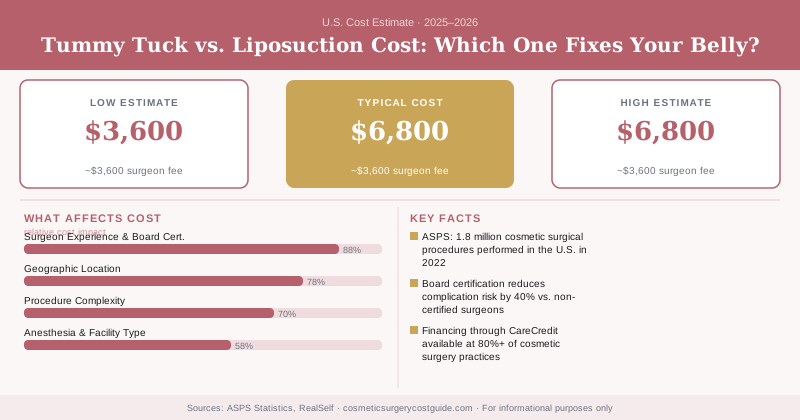
The Aesthetic Society pegged the average surgeon fee for a tummy tuck (abdominoplasty) at roughly $6,800 in 2023, while liposuction sat closer to $3,600. But the fee isn’t the whole story.
| Liposuction | Tummy Tuck |
|---|---|
| ~$3,600 surgeon fee | ~$6,800 surgeon fee |
| Removes fat only | Removes fat + loose skin |
| No muscle repair | Repairs separated muscles |
| Tiny scars | Hip-to-hip scar |
| 1–2 week recovery | 4–6 week recovery |
What each procedure actually solves
Liposuction is for stubborn fat that won’t budge with diet or exercise. Good skin elasticity is a must. If your skin snaps back, lipo alone can sculpt you beautifully. But if your skin is loose or stretched, lipo will just leave you with deflated, hanging skin. That’s the trap.
A tummy tuck is built for loose skin and separated abdominal muscles, the classic combo after pregnancy or major weight loss. The surgeon cuts away the excess skin, stitches the muscles back together, and pulls everything taut.
The post-pregnancy question
Here’s where a lot of moms land. Pregnancy stretches the skin and often separates the abdominal muscles, a condition called diastasis recti. No amount of crunches fixes separated muscle. Only surgical repair does. That’s why a tummy tuck is the go-to for many after kids, even though it costs nearly double.
If your only issue is a roll of fat with tight skin, lipo is faster, cheaper, and leaves barely a mark. Our liposuction cost guide breaks down per-area pricing if you’re targeting just the flanks or lower belly.
Got loose skin or separated muscles? You need a tummy tuck, and lipo alone will disappoint you. Got firm skin and just stubborn fat? Liposuction saves you thousands and weeks of recovery. The skin pinch test with your surgeon settles it.
Why the tummy tuck costs more
You’re not just paying for more surgical time, though there’s plenty of that. A tummy tuck almost always requires general anesthesia and a longer stay in the OR. The facility fee climbs, the anesthesia bill climbs, and recovery support adds up. The full tummy tuck cost often lands between $8,000 and $12,000 once you add anesthesia, facility, and garments.
Lipo can sometimes be done under local anesthesia for smaller areas, which keeps the total down.
The combo option
Plenty of patients do both. A surgeon can perform liposuction on the flanks during a tummy tuck to refine the waistline while removing the apron of skin in front. Bundling them in one surgery saves on anesthesia and facility fees compared to two separate operations. Ask whether a combined “lipo-abdominoplasty” makes sense for your case.
Don’t let price alone push you toward lipo when you actually need a tummy tuck. Removing fat from skin that won’t retract creates a worse contour than doing nothing. A consult with a board-certified plastic surgeon should include a skin elasticity check before any quote.
Recovery: be realistic
Liposuction recovery is genuinely mild for most. Swelling and bruising for a couple of weeks, a compression garment, and you’re back to desk work fast.
A tummy tuck is a real operation. You’ll be hunched for a week, drains may stay in for several days, and lifting is off-limits for weeks. The CDC and surgical societies consistently note that proper recovery time reduces complications, so don’t rush it.
Scarring trade-offs
Lipo’s incisions are tiny, often hidden in skin creases. A tummy tuck leaves a long horizontal scar low on the abdomen, usually below the bikini line. It fades over a year or two but never fully disappears. For many patients, trading a scar for a flat, tight stomach is well worth it.
Bottom line
This isn’t really a price contest, it’s a needs contest. Loose skin and weak muscles point to a tummy tuck. Stubborn fat with good skin points to liposuction. If you’re not sure how you’ll pay for either, our cosmetic surgery financing guide covers monthly plans and what they actually add to the total.
Frequently Asked Questions
A tummy tuck (abdominoplasty) averages around $6,800 in surgeon fees, while liposuction typically costs about $3,600 according to 2023 data from The Aesthetic Society. The price difference reflects that a tummy tuck removes fat and excess skin while also tightening underlying muscles, whereas liposuction only removes fat deposits. Additional costs for anesthesia, facility fees, and post-operative care will increase the total out-of-pocket expense for either procedure.
Insurance rarely covers either procedure since both are considered cosmetic surgeries, meaning you'll typically pay the full cost out-of-pocket unless there's a documented medical necessity (such as a tummy tuck after massive weight loss causing skin breakdown). Most patients can expect to pay between $9,000 and $15,000 total for a tummy tuck and $5,000 to $10,000 for liposuction when including all facility and anesthesia fees. Some surgeons offer financing plans to help spread these costs over time.
If you have both excess fat and loose or sagging skin, a tummy tuck is the better choice even though it costs nearly double liposuction, because it addresses both issues and tightens the abdominal muscles. Liposuction alone won't remove the loose skin and may leave you with a worse appearance if significant skin laxity exists. Your surgeon can evaluate your skin elasticity and fat distribution during a consultation to confirm which procedure will give you the results you're seeking.